
I. Before
The empty city
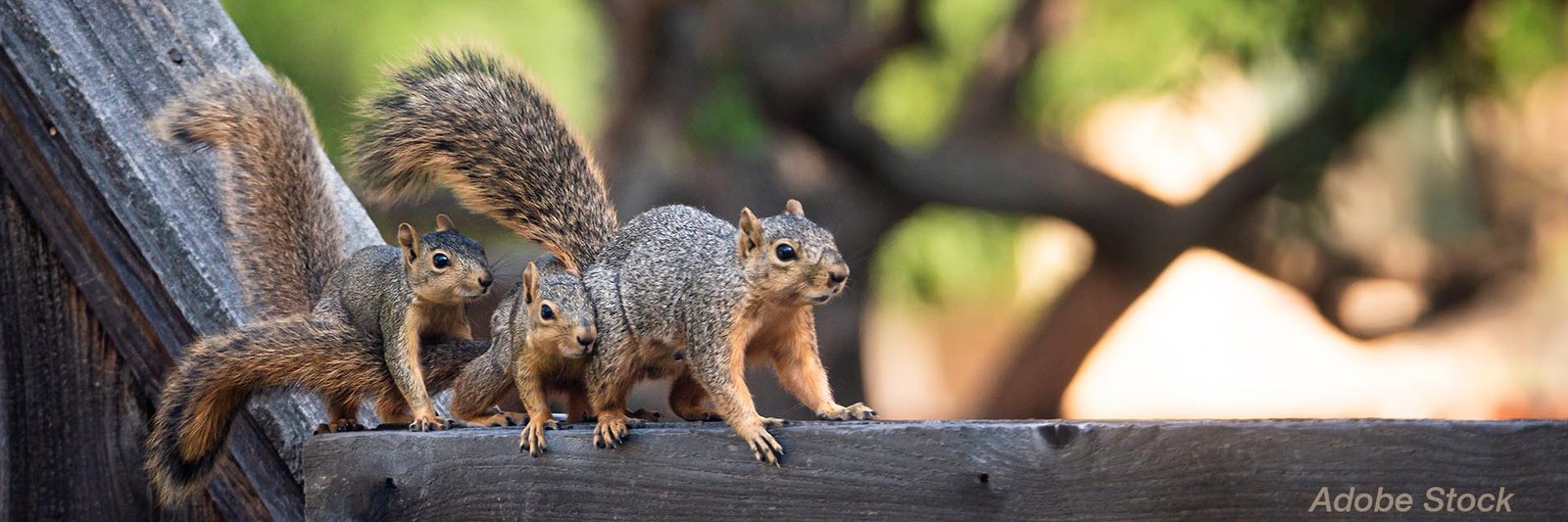
Picture an American city in 1840. Church steeples, horse-drawn wagons, brick storefronts, dusty streets. There are trees, but not the way we know them now: few parks, few mature shade trees, almost none of the green corridors that thread through neighborhoods today. And there are very few squirrels.
That sounds strange, because the squirrel is now one of the most familiar wild animals in North America. We see them on campuses, in parks, along sidewalks, outside apartment windows. They feel like a natural part of city life. They were not. For most of the nineteenth century, gray squirrels were woodland animals. They lived in forests, not downtowns. They were hunted for food, trapped as pests, and now and then erupted into enormous migrations that flattened crops. A city resident no more expected to see a squirrel in town than a deer in the business district.
The urban squirrel did not appear by accident. It was made, out of changing attitudes, new parks, newly planted trees, and deliberate introductions. Americans decided that squirrels belonged in their cities, and then set about building cities where squirrels could survive. The squirrel on your campus lawn is not simply a wild animal adapting to urban life. It is the result of one of the largest and most successful wildlife experiments in American history.
California’s first squirrels
Long before any of this reached the West Coast, California already had squirrels of its own, and they were worth knowing.
High in the oak woodlands and pine forests lived the Western Gray Squirrel: silver along the back, clean white at the belly, with a tail so long and feathered it seems built for ceremony. It is a shy animal, gone up the far side of a trunk before you have quite registered it. In the conifer country of the Sierra and the north ranged the Douglas Squirrel, small, rusty-bellied, and gloriously loud, scolding hikers from a safe branch overhead. John Muir loved it above all the rest and called it the “squirrel of squirrels.” And somewhere in the dark, almost never seen, Humboldt’s Flying Squirrel glided from tree to tree.

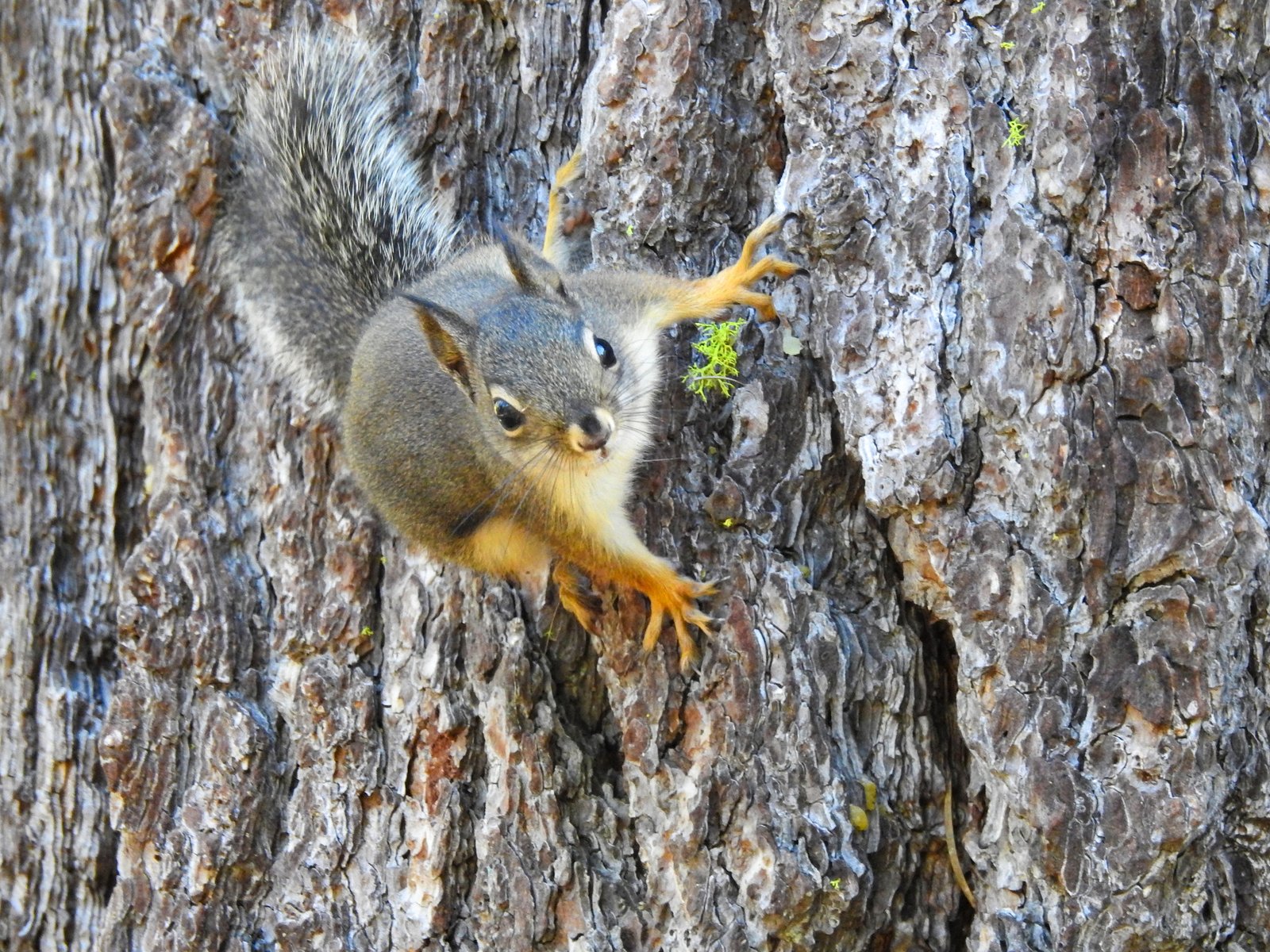
These are forest animals through and through, bound to unbroken canopy and old, undisturbed woods. They never evolved alongside us, and for the most part they never learned to. California’s first cities, young and still thin on shade, were no more squirrel country than early Boston had been. So the natives stayed in the forest. The squirrels that would one day rule the city were going to arrive from somewhere else entirely.
II. The longing
A hunger for nature in the city
By the second half of the 1800s, American cities were swelling, louder, denser, and grayer by the year. Machines were taking over the work of animals. The dairies and the slaughter yards were pushed out to the edges. The city was becoming a country of stone and coal smoke, and a great many people felt the absence of something they couldn’t quite name.
What they wanted back wasn’t wilderness. It was something smaller and gentler: a little green, a little company. So they lined the avenues with shade trees and turned the old town commons from working pasture into places to stroll. Into that longing stepped the squirrel, bright-eyed, quick, endlessly busy, and, as the naturalist John Burroughs wrote, a creature of genuine grace.
“An elegant creature, so cleanly in its habits, so graceful in its carriage…”
— John Burroughs, naturalist
The first squirrels, and the first failures
So people simply went and got some.
In 1847, three squirrels were let loose in Philadelphia’s Franklin Square, with food set out and little wooden boxes nailed up for nesting. Boston followed in 1855, releasing squirrels onto the Common. By the early 1860s New Haven had a colony on its green. The cities paid for all of it, gladly. Boston spent $33.27 feeding its Common squirrels through the winter of 1856–57. The New Haven squirrels did so well, one account marveled, that they grew “so obese from good living that they are continually missing their hold and falling from the tree tops.”
And then, one by one, they were gone.
By the mid-1860s every one of these first colonies had failed, to roaming dogs, to neglect, to culls, to a Civil War that turned the Common into a parade ground. The squirrels had lived entirely on human kindness. They couldn’t push past the single square where we had set them down, and the moment our attention wandered, they slipped away.
The lesson was quiet, but it was decisive: you cannot simply add squirrels to a city. First the city itself has to change.
III. The greening
Olmsted builds a city a squirrel can live in
The change, when it finally came, arrived from a direction nobody expected: landscape architecture.
Beginning in the 1870s, Frederick Law Olmsted and the great park-makers gave American cities something they had never possessed: wide, deliberately wild-looking parks, planted thick with trees and laid out to feel like open country dropped into the heart of the metropolis. Central Park. Boston’s green chain of parks. Rock Creek in Washington. These were not tidy little squares. They were big enough, and green enough, to be something genuinely new. They were habitat.
In 1877, with Central Park barely finished, its keepers slipped a handful of gray squirrels into the wooded tangle of the Ramble. This time it took. Within six years there were so many the park talked of thinning them out. They spread to Riverside Park, onto the Columbia campus, across the water into the Bronx, and, most important of all, out past the park walls and into the streets beyond.
The parks had become what ecologists call source populations, wellsprings of surplus animals quietly seeding the country around them. At last we had built a place where a squirrel could make its own living.
Out of the park and onto the street
But the parks were only half the story. The other half was everything in between them.
As the cities reached outward, they reached out green. Streetcar suburbs turned farmland into a quilt of houses, gardens, and freshly planted shade trees. Boston’s new Back Bay went up already lined with saplings. And the very animal that farmers had shot on sight as vermin was suddenly welcome on the block. Homeowners set out food, and a few even hung nest boxes by the porch.
The squirrels took it from there. They worked out that an attic or a hollow wall was warmer and safer than any tree. They learned to run the telephone and power lines like tightrope walkers, a wire’s height above the dogs. They learned to live on what we dropped and threw away, all year round. One by one the scattered park colonies grew along the leafy streets until they touched and merged into a single connected population, far tougher than the doomed little bands of the 1850s had ever been.
It took three forces, not one
Pull any one of them away, and the squirrel on your lawn never happens.
People
The ones who wanted them here, who fed them, sheltered them, and stood up for them, out of plain affection and civic pride.
Landscape
A city remade with parks, street trees, and leafy suburbs, green enough, at last, to be a home.
The animal
And the squirrel’s own knack for it: nesting, wandering, and making a living from whatever the city left lying around.
People + Landscape + the Animal’s own adaptation → the urban squirrel
IV. The companion
America’s urban companion
And then something grew up alongside the squirrels that nobody had quite planned for. Love. Real, public, peanut-in-the-pocket love.
Feeding them became a small daily devotion. Parks and colleges stocked nest boxes and pressed peanuts on anyone who passed. Certain feeders turned into local legends: the “squirrel woman” who held court in Central Park, and William Mandas, the pushcart man of Dupont Circle, whose flock was said to have quadrupled under his care. For a great many people the squirrel was more than a charming distraction. It was a way to be kind in plain sight, to teach a child gentleness, to soften a hard city, to practice a little everyday mercy on a creature willing to take it from your open hand.
“Beggars, Squirrels, Birds — All Remembered”
— Boston newspaper headline, Thanksgiving 1908
The squirrel, in other words, had been let into the family.
When affection had an edge
That welcome, though, had edges, and they were not always gentle ones.
The same warmth that drew the squirrel in was sometimes turned around to mark who didn’t belong. Cats and dogs were branded enemies of the trusting park squirrel. Immigrants and poor children drew the same suspicious eye, judged, often unjustly and through the ugly prejudices of the day, by whether they treated the animals “properly.” Tenderness toward wildlife and contempt for certain people could share a single breath.
And even the squirrels found the limits of our affection. Let them nip the hand with the peanut, dig up the tulip bed, or simply grow too numerous, and the mood could turn on a dime. Park managers floated culls. Newspapers grumbled about squirrels gone “lazy” and “pauperized” on handouts. The darling became a nuisance, sometimes overnight. That double feeling, cherished and resented in the very same instant, has shadowed the city squirrel ever since.
V. Coming west & the reckoning
The squirrels come west
The recipe that had conjured urban squirrels in the East turned out to travel well: plant the trees, build the parks, set out the food. As western cities grew up and grew their own leafy canopies, the same thing happened here, with one twist. The squirrels that moved into those western parks weren’t the bashful natives. They were newcomers, and they were ready.
The Eastern Gray Squirrel and the Fox Squirrel had both come from exactly this kind of human-built world, back east and across the Midwest, and it showed. One of California’s best-remembered introductions traces to around 1904, when residents of the Sawtelle Veterans Home in West Los Angeles brought in fox squirrels. The fox squirrel proved the wider traveler of the two. It spread through the parks and suburbs of the Los Angeles basin and, from other introductions, across the Bay Area and the farm towns of the Central Valley, pressing right up to the edges of the native forest, but no farther.
The Eastern Gray took a narrower path. It settled into the older, leafy neighborhoods of the San Francisco Bay Area and around Sacramento, and it has largely stayed there, a city squirrel in the strictest sense, seldom found beyond the towns, and absent from Southern California altogether. Different as their two maps are, both newcomers did in California what their great-grandparents had done in New York. Bold, clever, and easy among people, they flourished wherever we had made the place green.
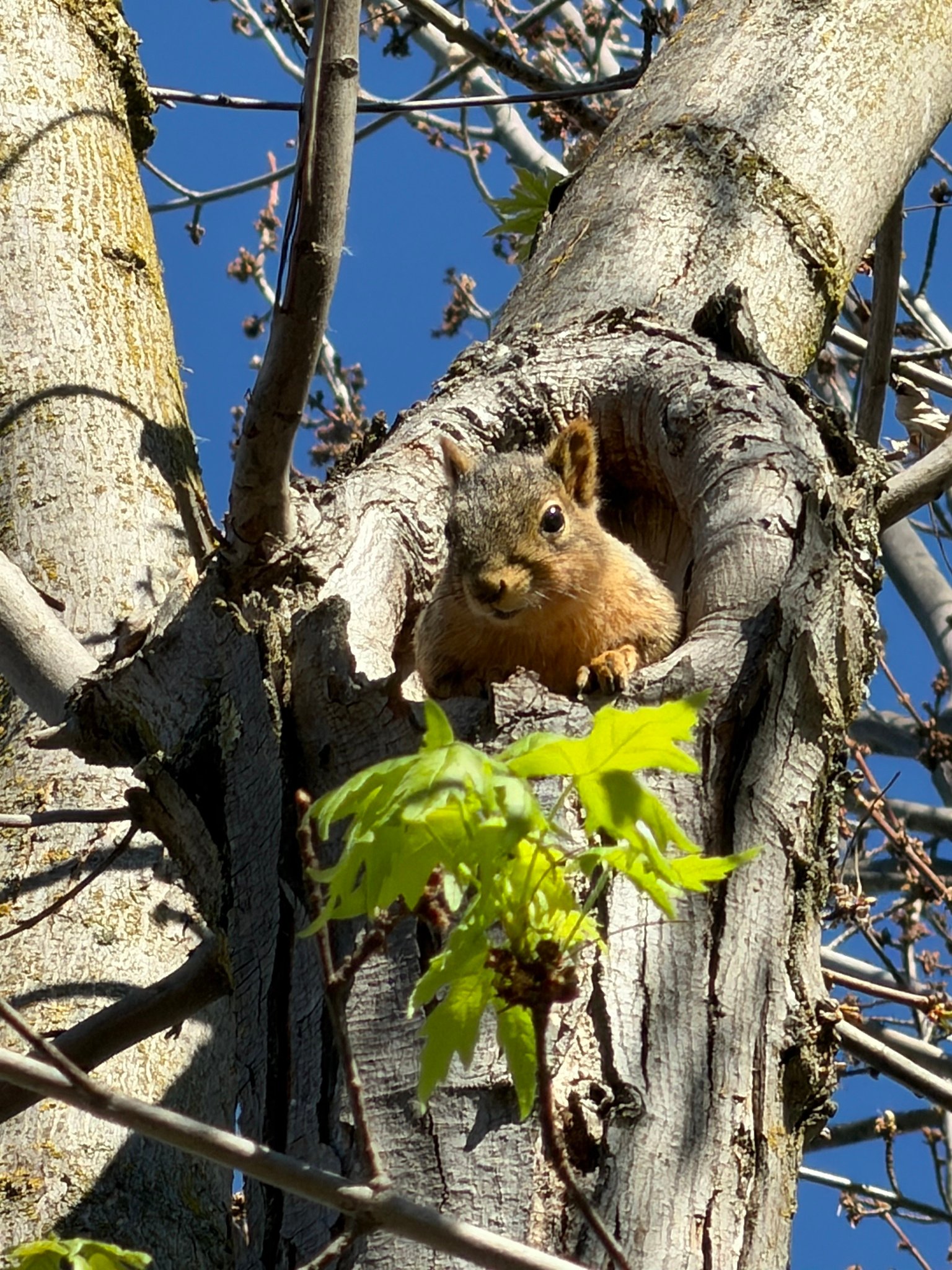
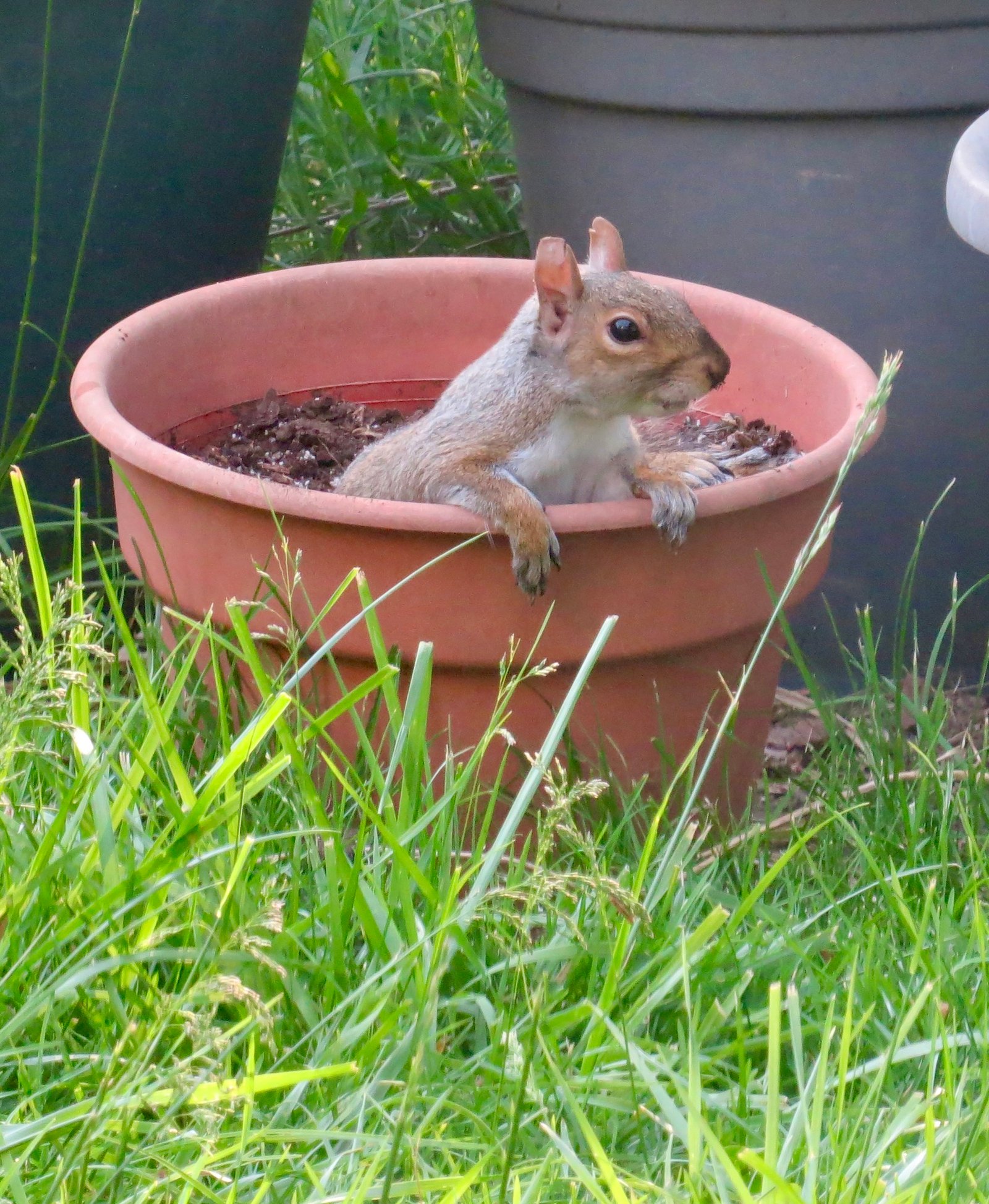
So the squirrel eyeing your sandwich on a bench in Berkeley or Pasadena is the far western chapter of a story that opened in a Philadelphia park in 1847.
What changed for the natives
This is the part of the story that refuses to settle into a tidy moral, and it asks to be told with care.
As the newcomers filled California’s cities, the native Western Gray slipped out of most of the places where people actually live. It is tempting to lay that entirely at the newcomers’ feet, and it is too simple. The Western Gray is a creature of the high tree canopy. It needs big, connected stretches of trees, forests and oak woodlands. It is by nature wary of us. It does not habituate to people the way the Eastern Gray does, and it will not cross open ground to reach the next stand of trees. Urban development broke the canopy into pieces. The safety net the native Gray depended on thinned out of the urban world. The newcomers were naturally suited to exactly this kind of landscape, and they moved into the gaps. In the fragmented woods around Santa Cruz, researchers found the Eastern Gray does not merely outlast the native but actively pushes it out of usable habitat. So the newcomers are not blameless either. Both things are true.
Disease pressed on it too. Notoedric mange, the work of a tiny burrowing mite, has swept through Western Gray populations more than once. In the 1920s an outbreak in the Sierra Nevada all but erased a local population that took decades to recover. Beginning around 2009, people in the San Bernardino Mountains watched mange move through their gray squirrels, an epidemic researchers followed partly through sightings the community sent in. How much of the native Gray’s retreat traces to disease, how much to lost forest, and how much to the newcomers is genuinely tangled, and still argued over.
What is clear is quieter, and a little sad. The native squirrels never became city squirrels at all. They stayed what they have always been, animals of the forest, living a life that has little to do with us, while a different kind of squirrel inherited the parks.
The complicated legacy
In the last stretch of the twentieth century, the way we saw our city squirrels shifted once again.
Ecology handed us a new pair of glasses, and old habits looked different through them. Feeding, once the very picture of kindness and good citizenship, was now waved off as harmful, and “No Feeding” signs went up in the same parks that had once handed out peanuts by the bag. The predators earlier generations had driven away, the hawks and the falcons, drifted back, and we welcomed them as proof of a city in good health. The squirrel was no longer a ward to be sheltered. It was wildlife now, best left to itself.
But the squirrels themselves carried on as though none of it concerned them. The old dream of a shared community of people and animals quietly faded. The squirrels, however, remained.
“The squirrels, however, remained.”
— Etienne Benson, on the end of the “moral community”
That is more or less where we still stand. The affection is real, and old, and runs deep. So are the ecological costs. The newcomers are a permanent part of the California cityscape now. The natives still matter, and still need their forests. The honest ending to this story isn’t a verdict. It is a relationship, one we entered on purpose and are still learning how to keep.
Why this history still matters
So the next time a squirrel sits up and begs you for a peanut, hold its gaze a moment longer than you usually would. You’re watching the living result of a decision, or rather thousands of small decisions, made by people who wanted a little wild company in their cities and went to the trouble of building it.
And that quietly changes the question. It stops being “is this the right squirrel, or the wrong one?” and becomes something far more interesting, and a good deal more honest: what kind of nature did we make when we made our cities, and now that it’s here, what do we want to do with it?
Sources
- Benson, E. (2013). The urbanization of the eastern gray squirrel in the United States. Journal of American History, 100(3).
- Jessen, T.D., Wang, Y., & Wilmers, C.C. (2018). Habitat fragmentation provides a competitive advantage to an invasive tree squirrel, Sciurus carolinensis. Biological Invasions, 20.
- Notoedric mange in Western Gray Squirrels (Sierra Nevada, 1920s; San Bernardino Mountains, 2009 onward): citation to be added.