Identify Your Squirrel

What squirrel is this?

Just saw a squirrel? You can use visible clues: habitat, size, belly, tail, face, and behavior. Many squirrels can be identified quickly, but no single clue is perfect. The strongest IDs come from several clues pointing in the same direction.


Start Here

Is it a tree squirrel?

Three quick rule-outs before the key.

It climbs & has a bushy tail

Long fluffy tail, lives in the trees, active in daylight, can forage on ground near trees, but retreats upward when startled.

✓ Tree squirrel — keep going below.

It dives into a burrow

Stocky body, thinner tail, stays near the ground, disappears into a hole — or it's body is little bigger than a baseball with bold facial stripes.

That's a ground squirrel or chipmunk, not a tree squirrel.

Ground squirrels & chipmunks →

It's night — and it glided

Big dark eyes, active after dark, sails between trunks on furred skin flaps.

That's the Northern Flying Squirrel — nocturnal and rarely seen.

Flying squirrels →


Location Clue

Where are you standing?

Habitat and location are often the strongest first clues.

City park, backyard, campus

Squirrels begging at picnic tables, running fence lines and rooftops, comfortable around people.

Most often an Eastern Gray or Fox Squirrel — both are introduced, urban-adapted, and comfortable around people.

Oak woodland or mixed forest

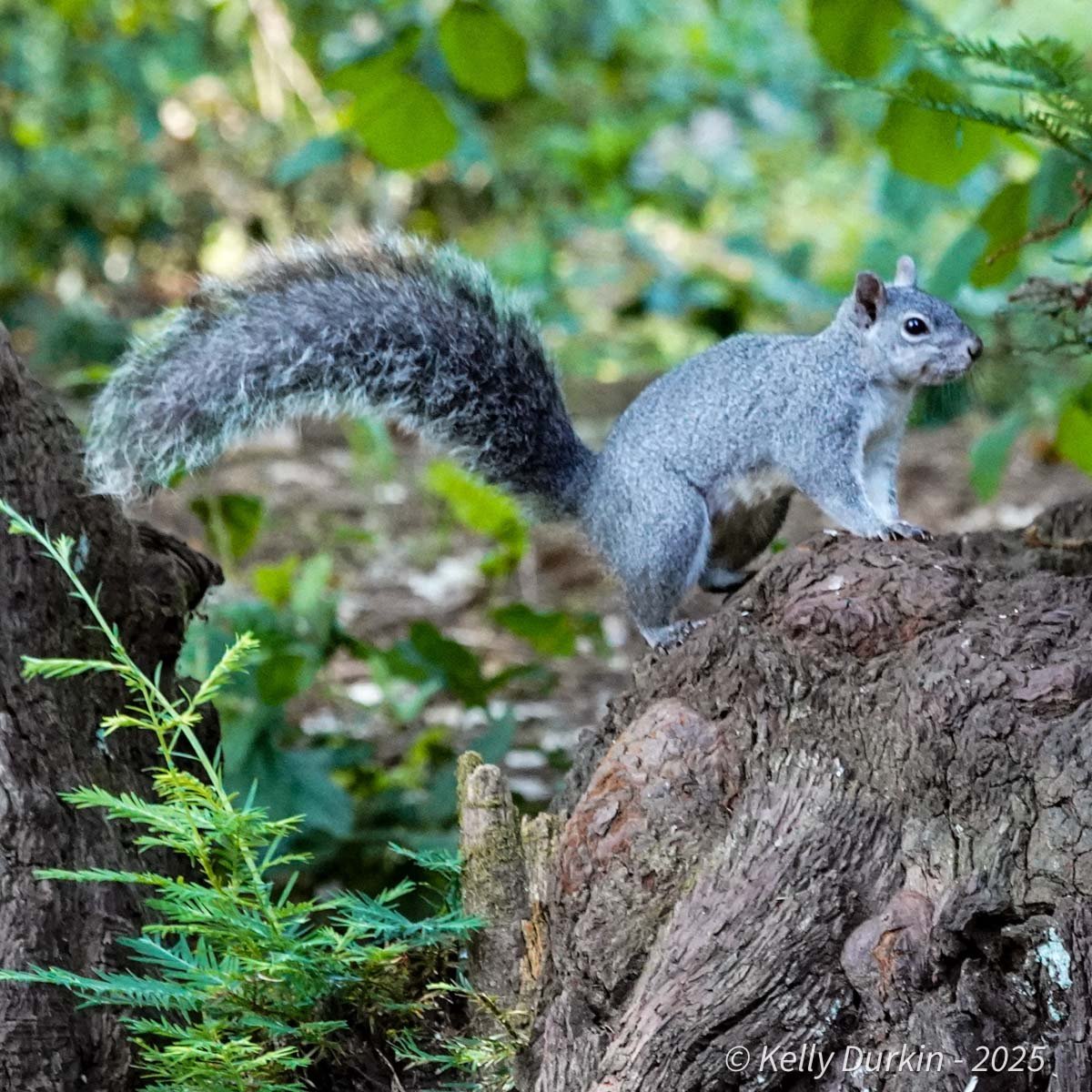
A wary, silver-gray squirrel that keeps its distance and stays close to the trees.

Often a native Western Gray Squirrel, especially if it is wary, silver-gray, and staying close to trees.

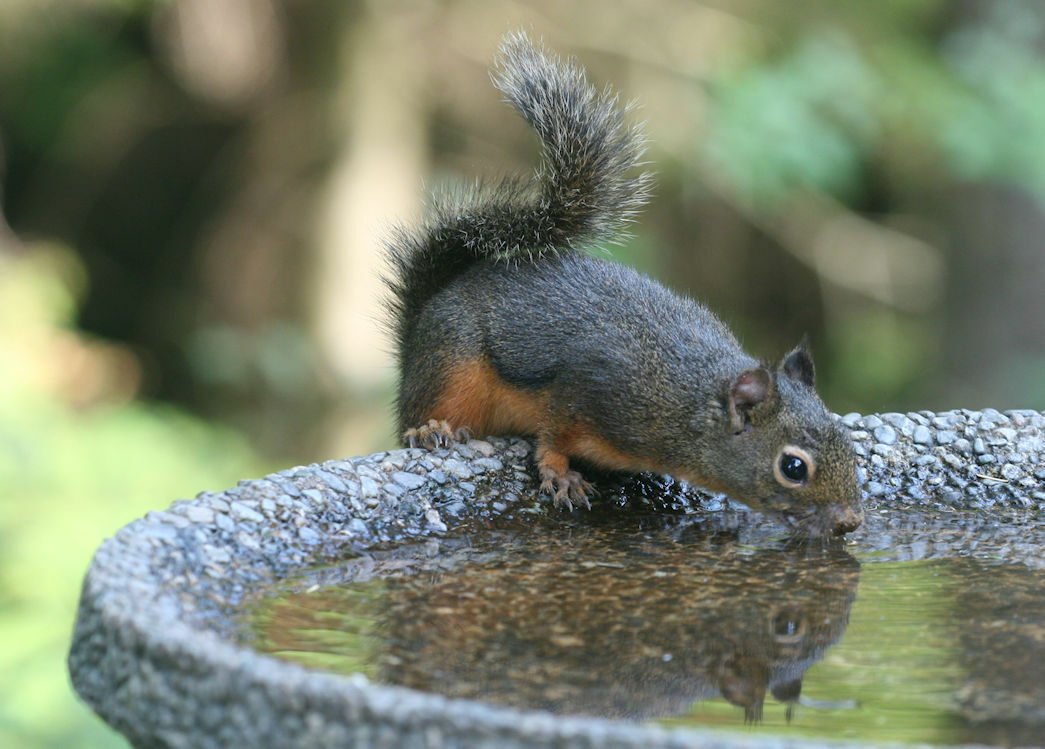
Conifer forest

A small, fast squirrel scolding you loudly from a branch — half the size of the others.

Often a native Douglas Squirrel, especially if it is small, fast, vocal, and moving through conifers.

Behavior is supporting evidence, not proof: squirrels that approach people often read Eastern Gray or Fox, while wary squirrels that keep their distance often read Western Gray.


The One-Glance Key

Two close-up clues

Belly and face can narrow the answer, but check them against habitat and range.

Step 1

What color is the belly?

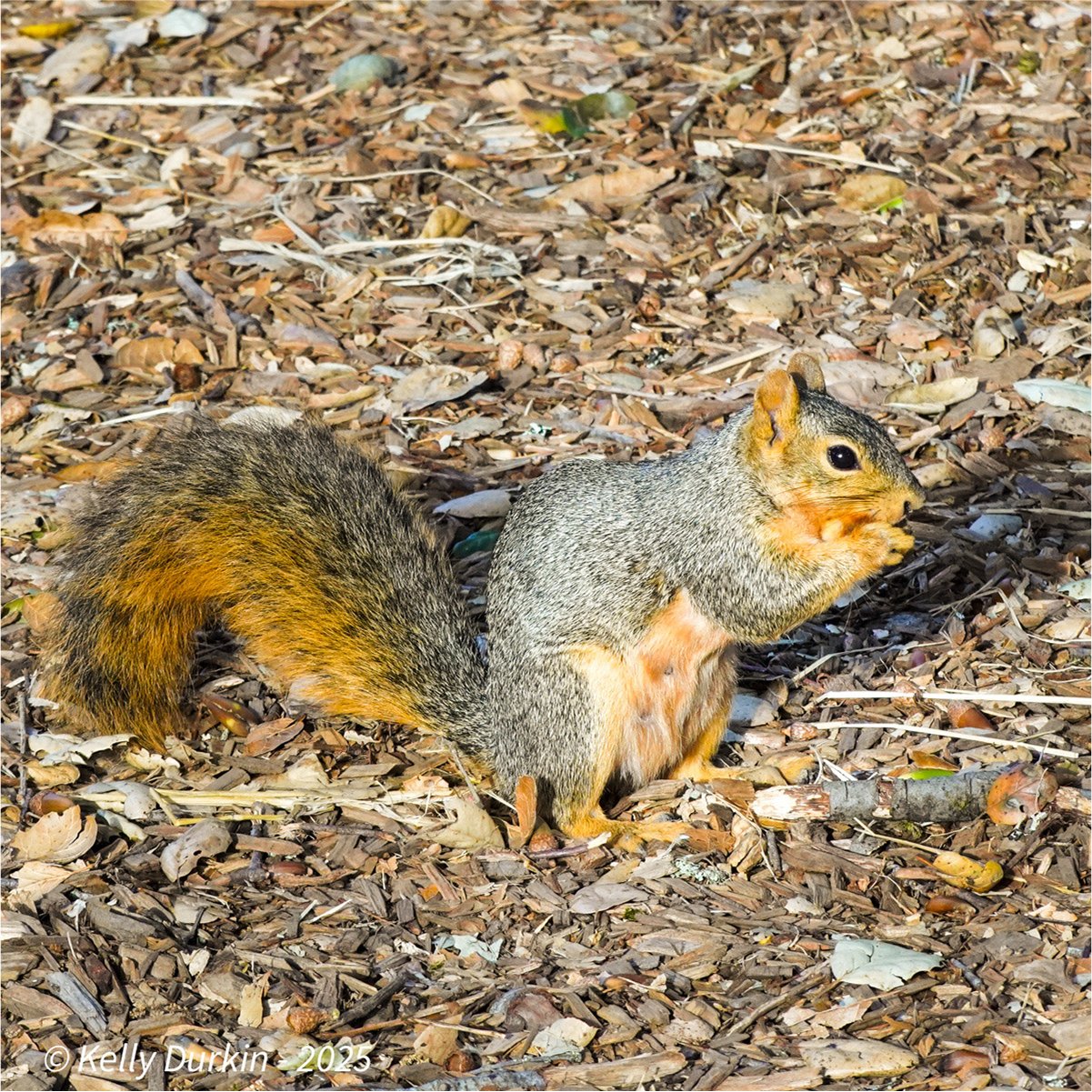
Fox Squirrel sitting up and eating, showing its rusty-orange belly

Rusty orange belly

Strongly suggests Fox Squirrel. In California, Fox Squirrels often show warm orange, rusty, or cinnamon tones, especially on the belly, face, legs, and tail.

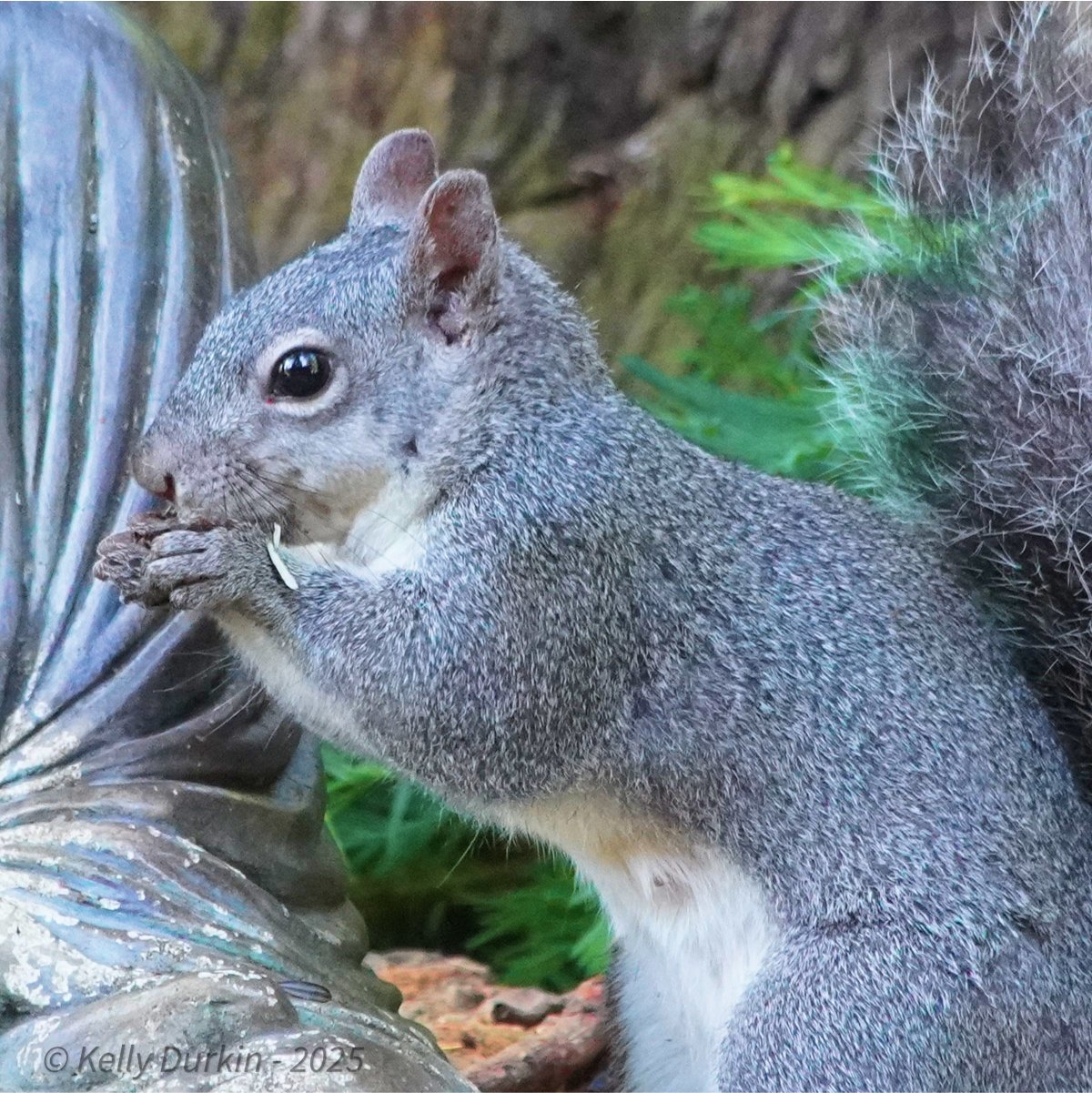
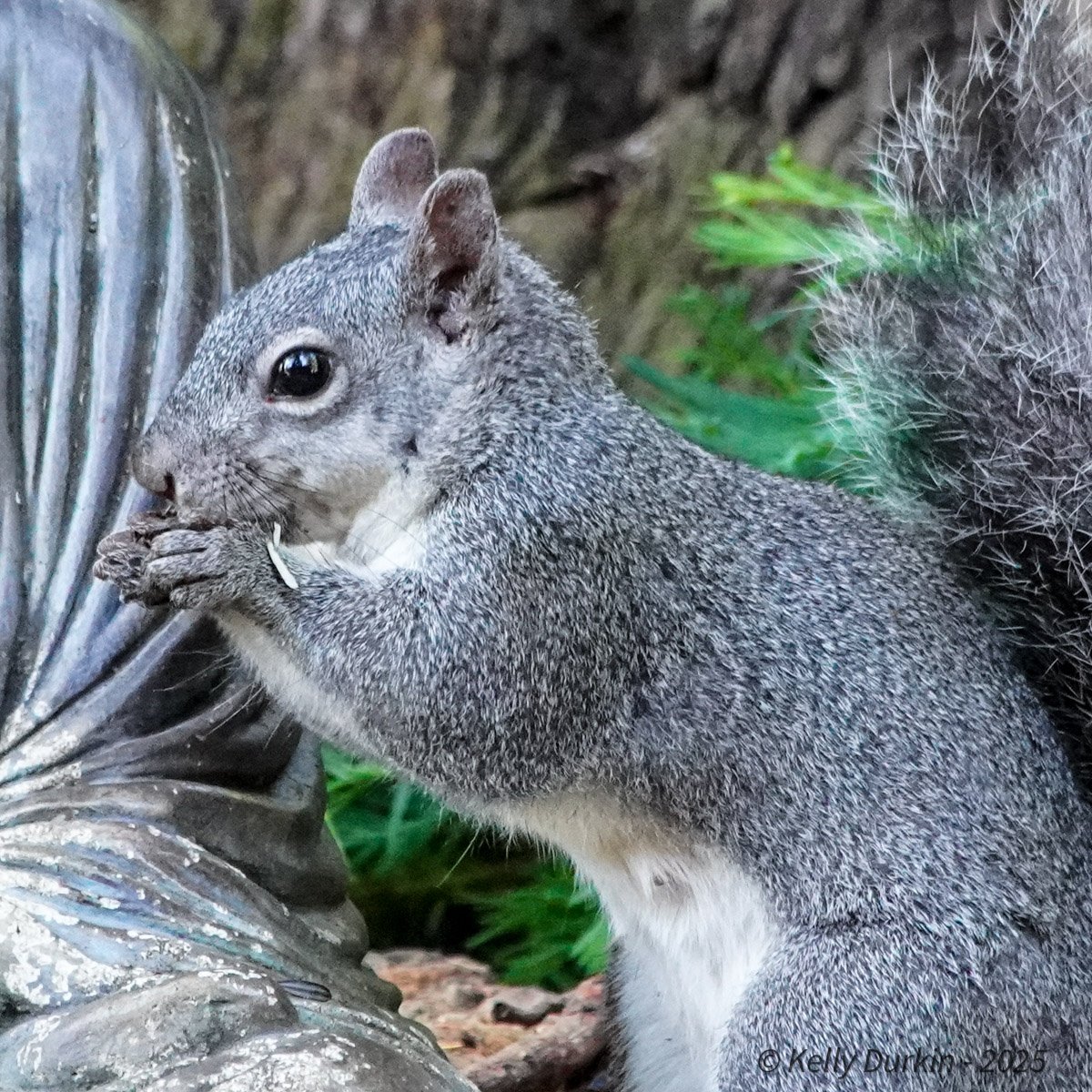
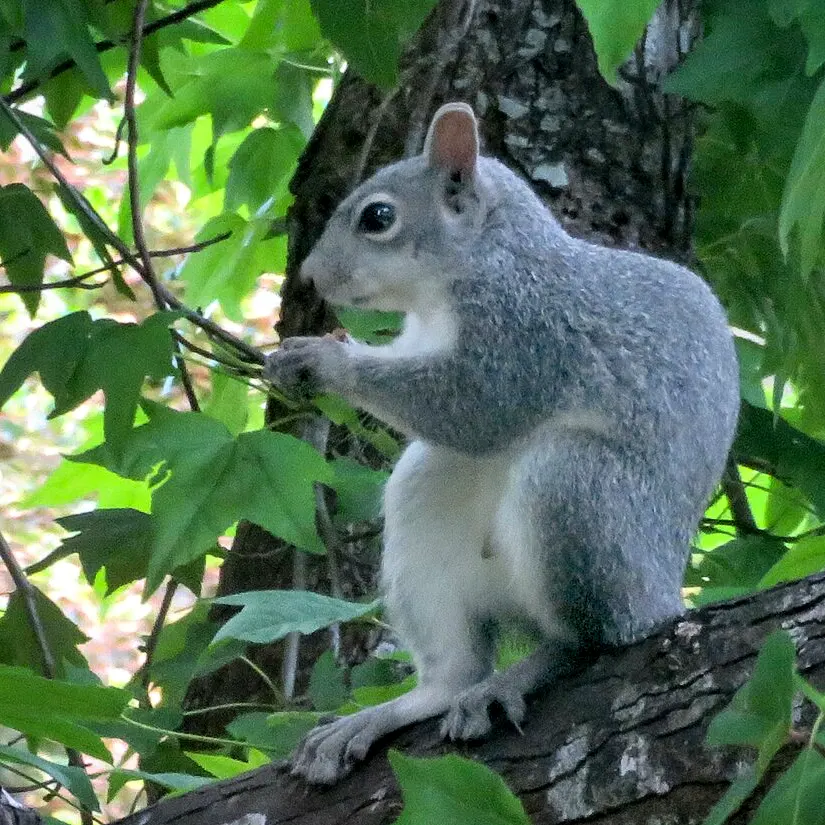
Western Gray Squirrel sitting up and eating, showing its white belly

White belly

Often points toward one of the two gray squirrels — but some Fox Squirrels can show surprisingly pale underparts. Go to Step 2.

Step 2

Is there brown fur around the eyes?

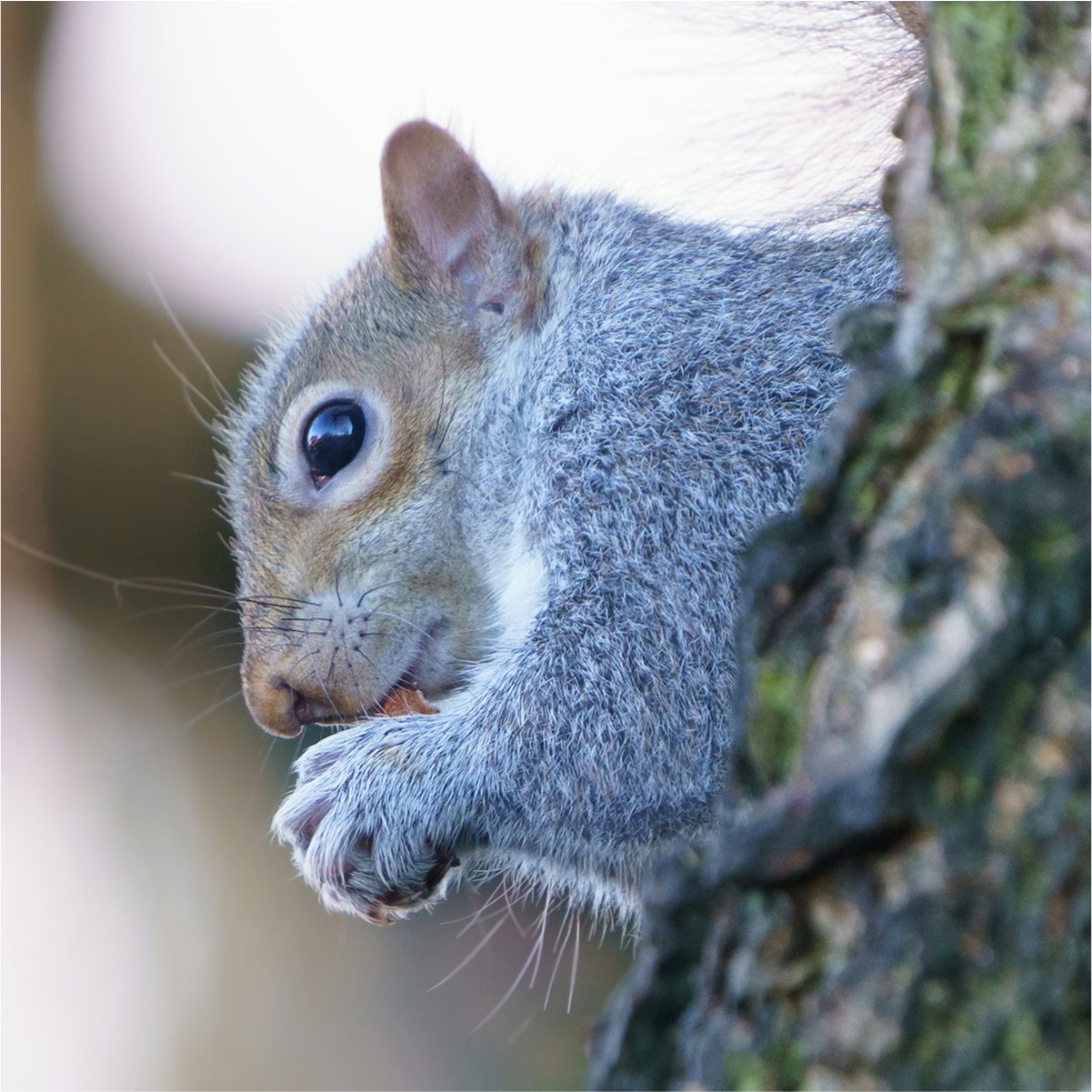
Eastern Gray Squirrel head close-up showing warm brown fur around the eyes

Brown-rufous eye fur, warm tones in the coat

Often points toward Eastern Gray Squirrel — especially in city parks, campuses, and neighborhoods where Eastern Grays are established.

Western Gray Squirrel head close-up showing a clean gray face with no brown around the eyes

Clean gray face — no brown eye fur

Often points toward Western Gray Squirrel — especially in oak woodland or mixed forest where Western Grays occur.

A noticeably small squirrel in a conifer forest — about half the size of the larger tree squirrels, often with a pale eye ring — strongly suggests a Douglas Squirrel. See size, next.

When clues disagree

Treat the first answer as a hypothesis, not a verdict. If belly, face, tail, habitat, and range point in different directions, slow down and compare more than one trait. Unusual individuals, worn tails, seasonal coats, escapees, and range expansions can all complicate identification.


Size at a Glance

The Douglas is about half the size

Total length, nose to tail tip.

Bar chart comparing average total length in inches: Humboldt's Flying Squirrel about 12, Douglas about 13, Western Gray about 23, Eastern Gray about 20, Fox Squirrel about 26
Average total length, including the tail. Western Gray 17–24 in · Eastern Gray 16–21 in · Fox Squirrel 18–28 in · Douglas 12–14 in.
Side-by-side photos of a Douglas Squirrel and a Western Gray Squirrel on the same wooden feeder, showing the Douglas at about half the size
Same feeder, two natives: Douglas Squirrel (left) and Western Gray Squirrel (right).

Confirm by Trait

Comparison stations

All four species, side by side, one trait at a time.

Belly

Western Gray Squirrel sitting upright with a bright white belly
Western Gray White belly
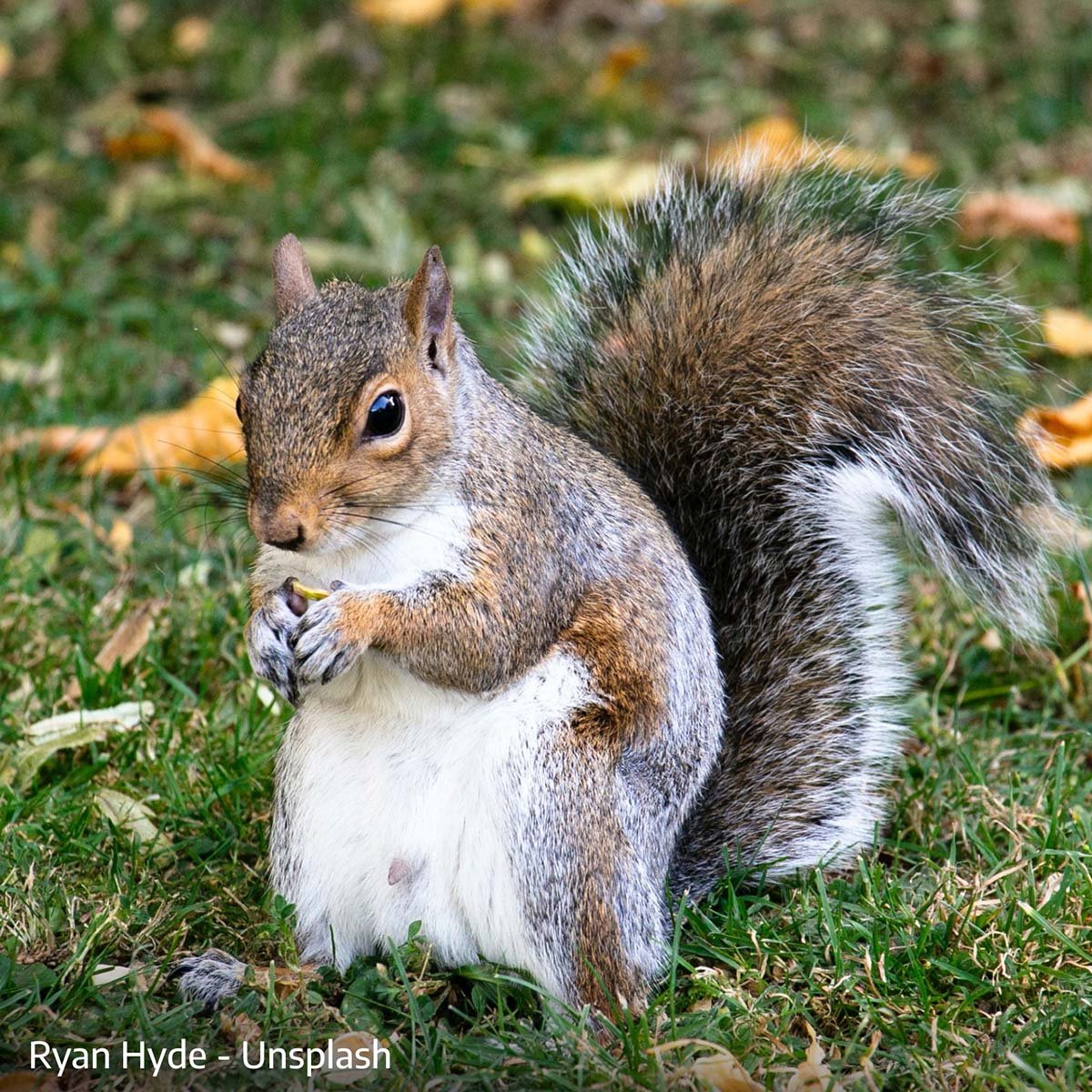
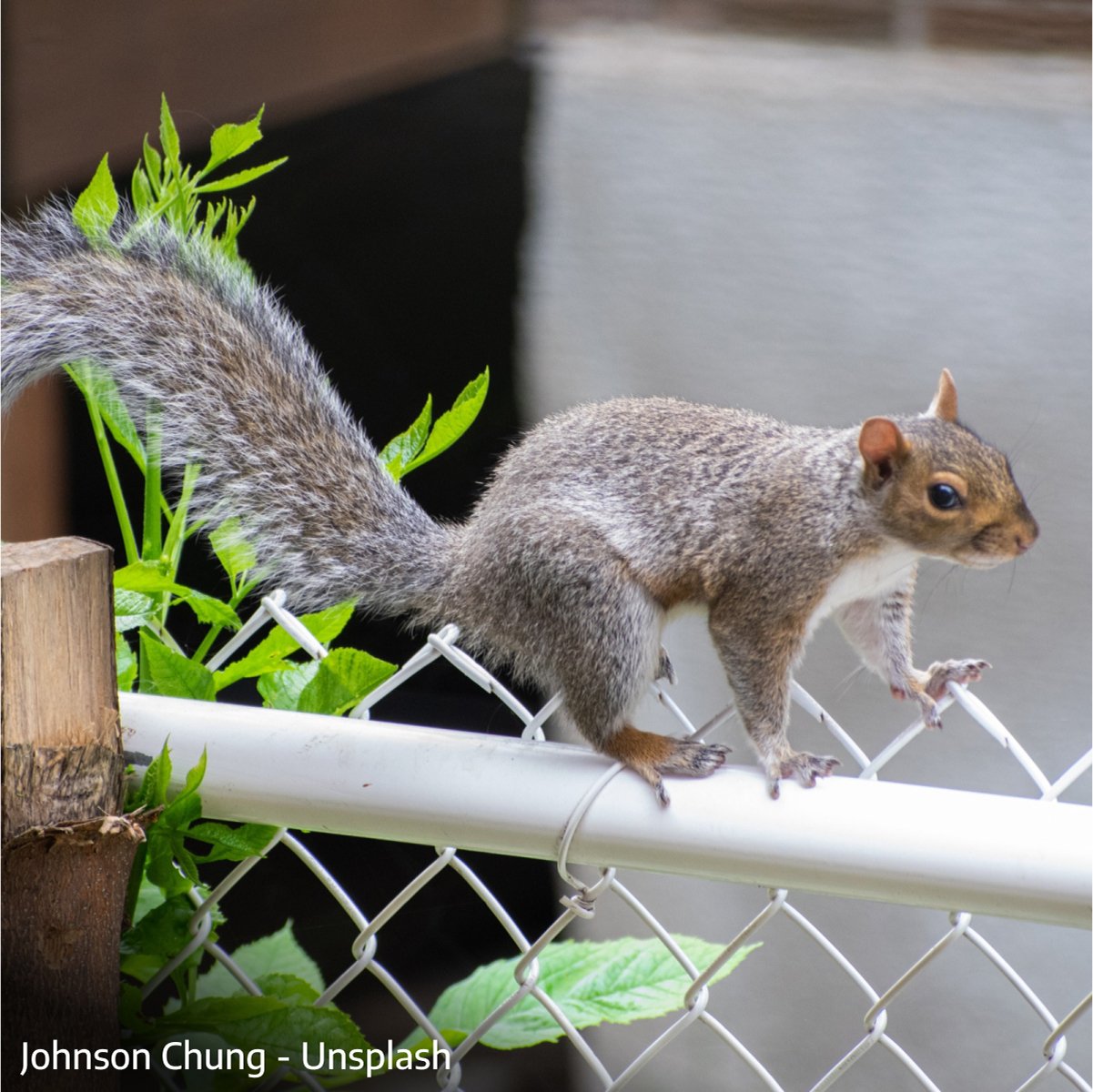
Eastern Gray Squirrel sitting upright with a white belly and warm brown flanks
Eastern Gray Usually white belly with warm flanks1
Fox Squirrel sitting upright with a rusty-orange belly
Fox Squirrel Often rusty-orange belly

Belly color helps, but it isn't absolute: Douglas bellies range from cream to burnt orange with the seasons, some Fox Squirrels show surprisingly pale underparts, and all-dark (melanistic) Eastern Grays have no white belly at all.

Seasonal variation

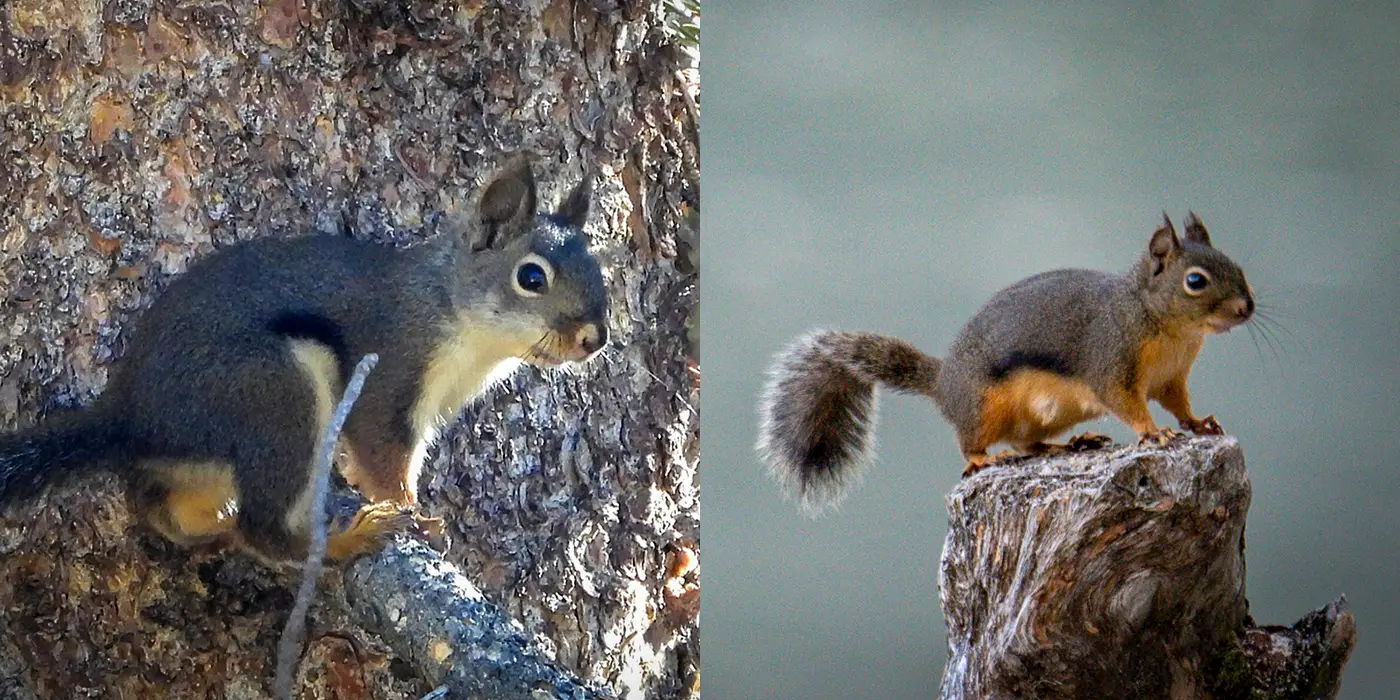
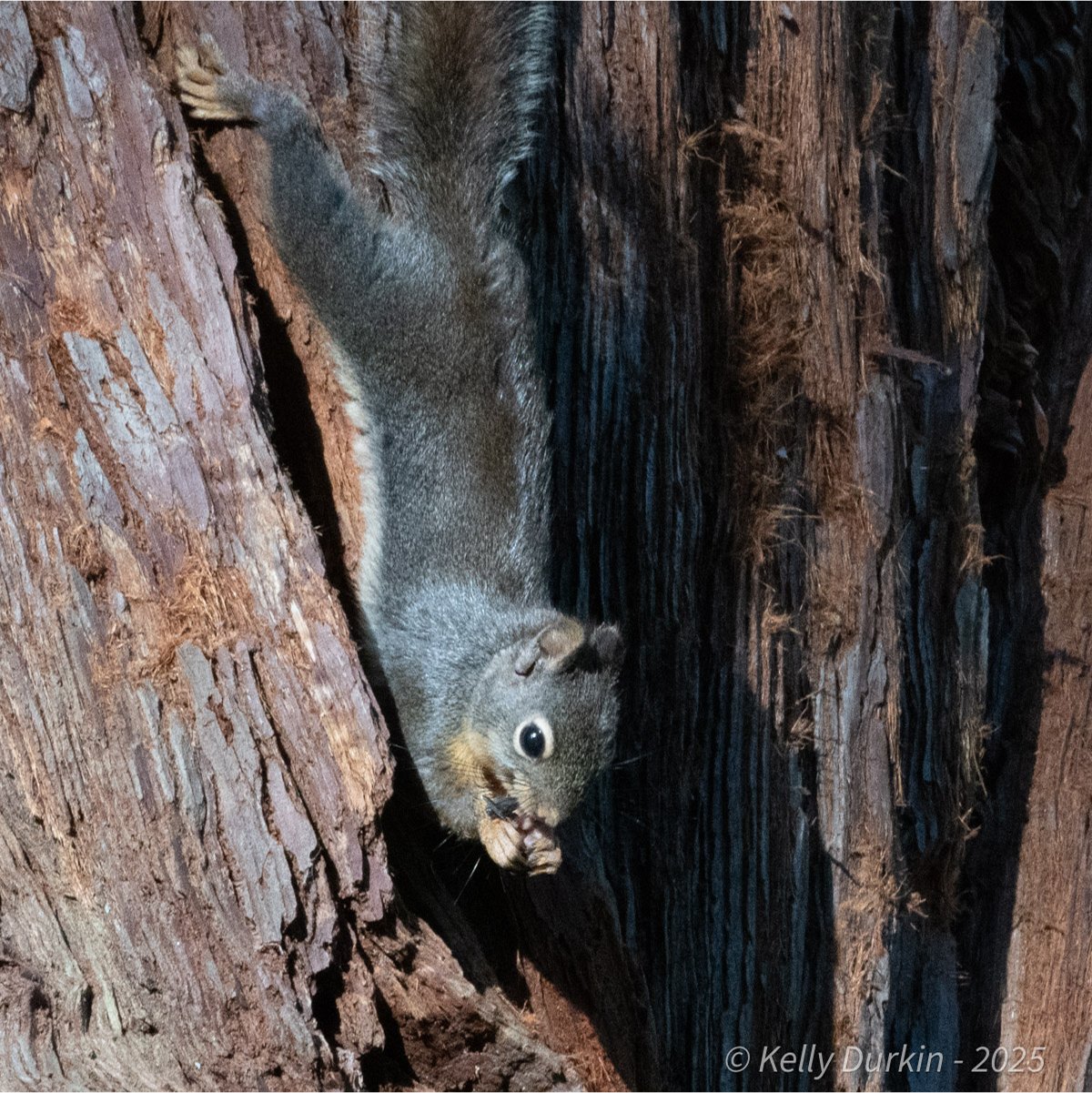
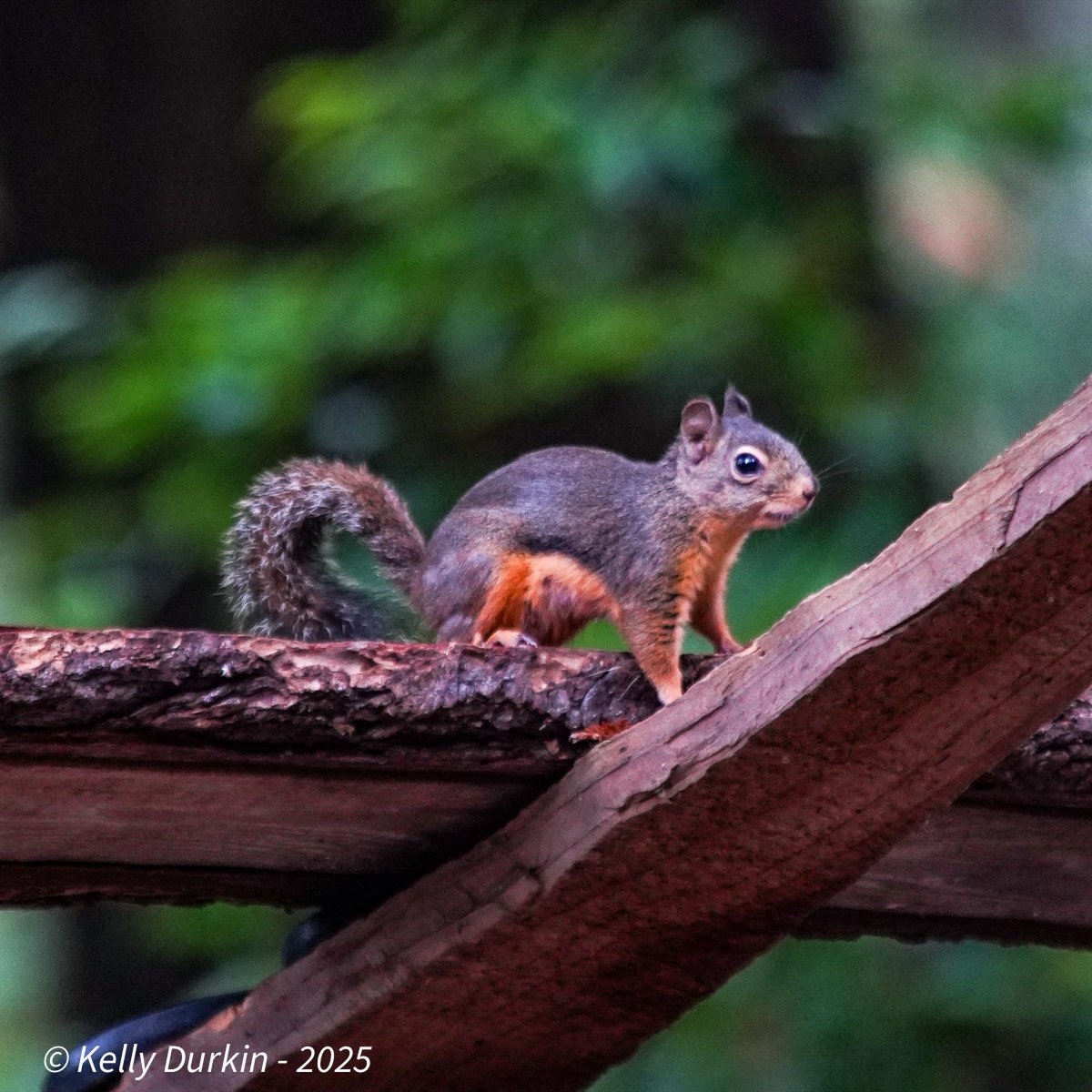
Two Douglas Squirrels in different seasonal coats: creamy buff belly in winter and spring, burnt orange in late summer and fall
Douglas squirrels are unusually variable. Their underparts may shift from creamy buff in winter and spring to rich orange in late summer and fall — a reminder that variation within a species can sometimes outweigh the differences between species. Don't let the season fool you. Both photos show Douglas squirrels.3

Face & eye area

Western Gray Squirrel head close-up with a clean gray face
Western Gray Clean gray face — little or no brown eye fur
Eastern Gray Squirrel head close-up with brown fur around the eyes
Eastern Gray Warm brown eye fur, often paler cheeks
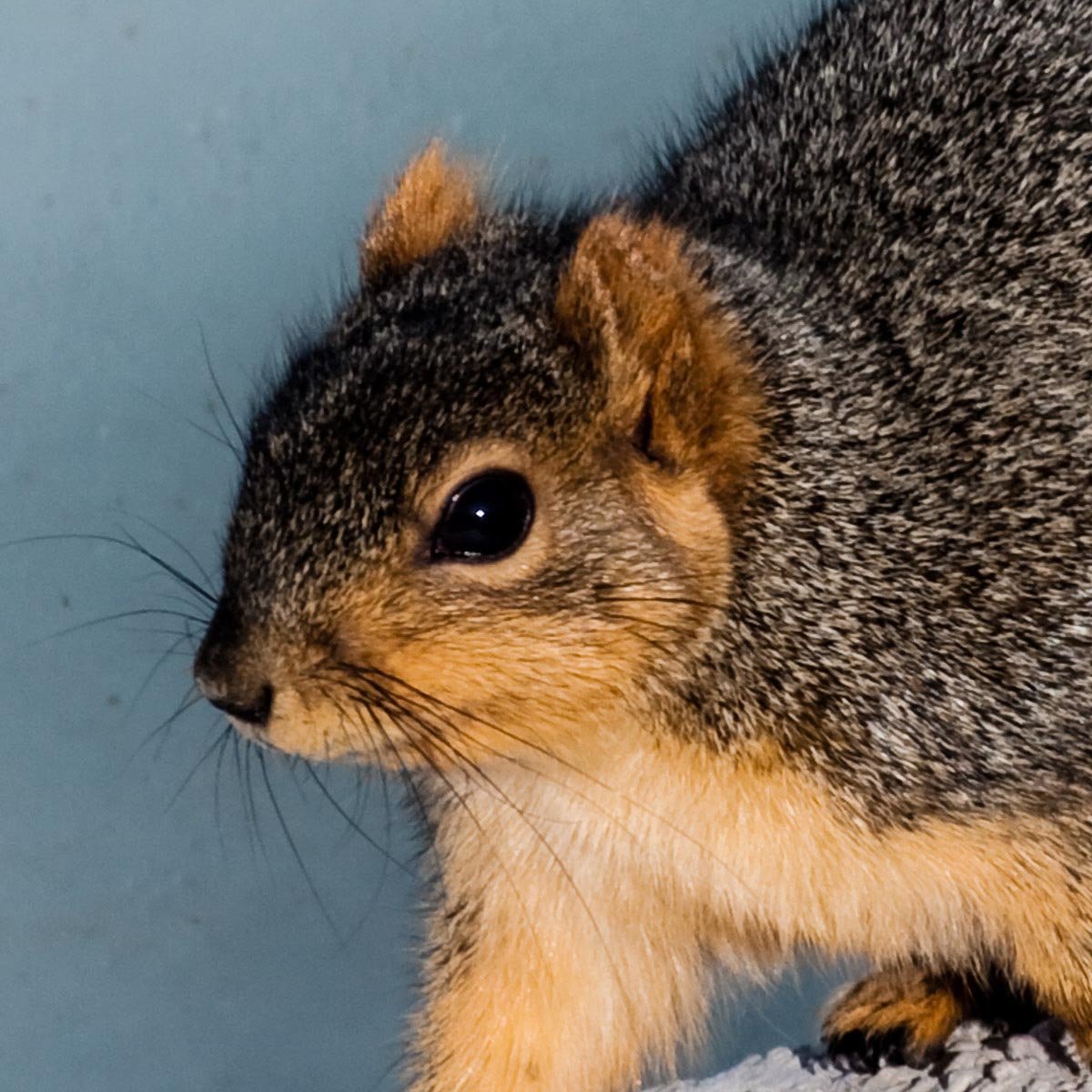
Fox Squirrel head close-up with warm rusty face tones and a less distinct eye ring
Fox Squirrel Warm rusty face; eye ring often less distinct
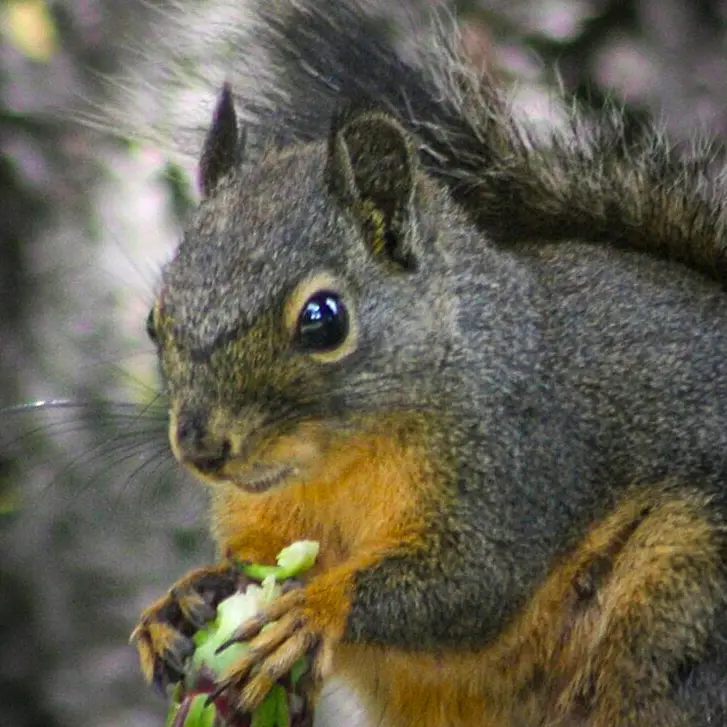
Douglas Squirrel face close-up showing a pale eye ring and warm rufous underparts
Douglas Prominent pale eye ring; ring color varies seasonally4

No single facial feature is always reliable. The eye area is most useful for separating the two grays: Western Gray usually has a cleaner gray face, while Eastern Gray often shows warmer brown fur around the eye and muzzle. Douglas and Fox Squirrels can also show pale eye rings, but those features are more variable.

Tail

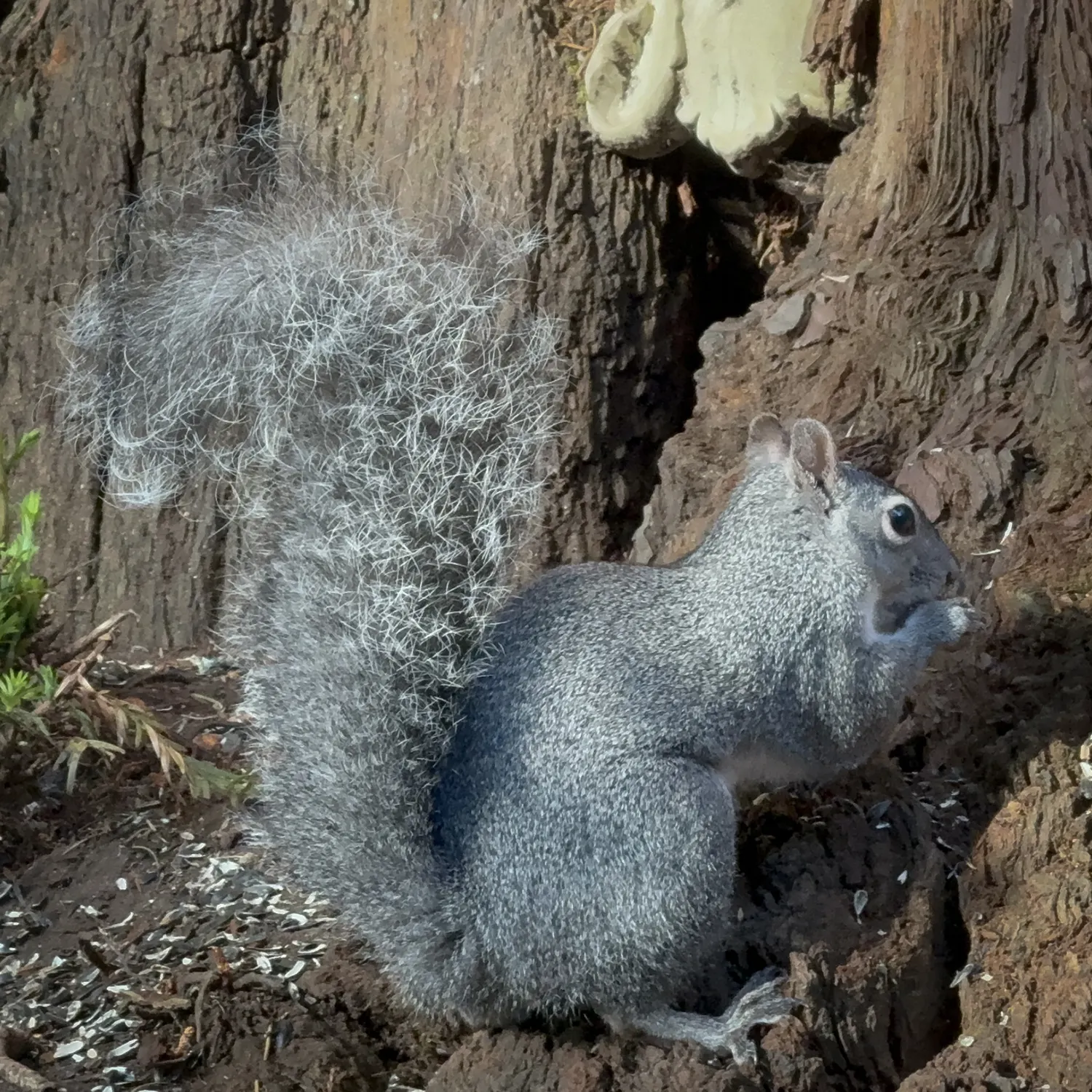
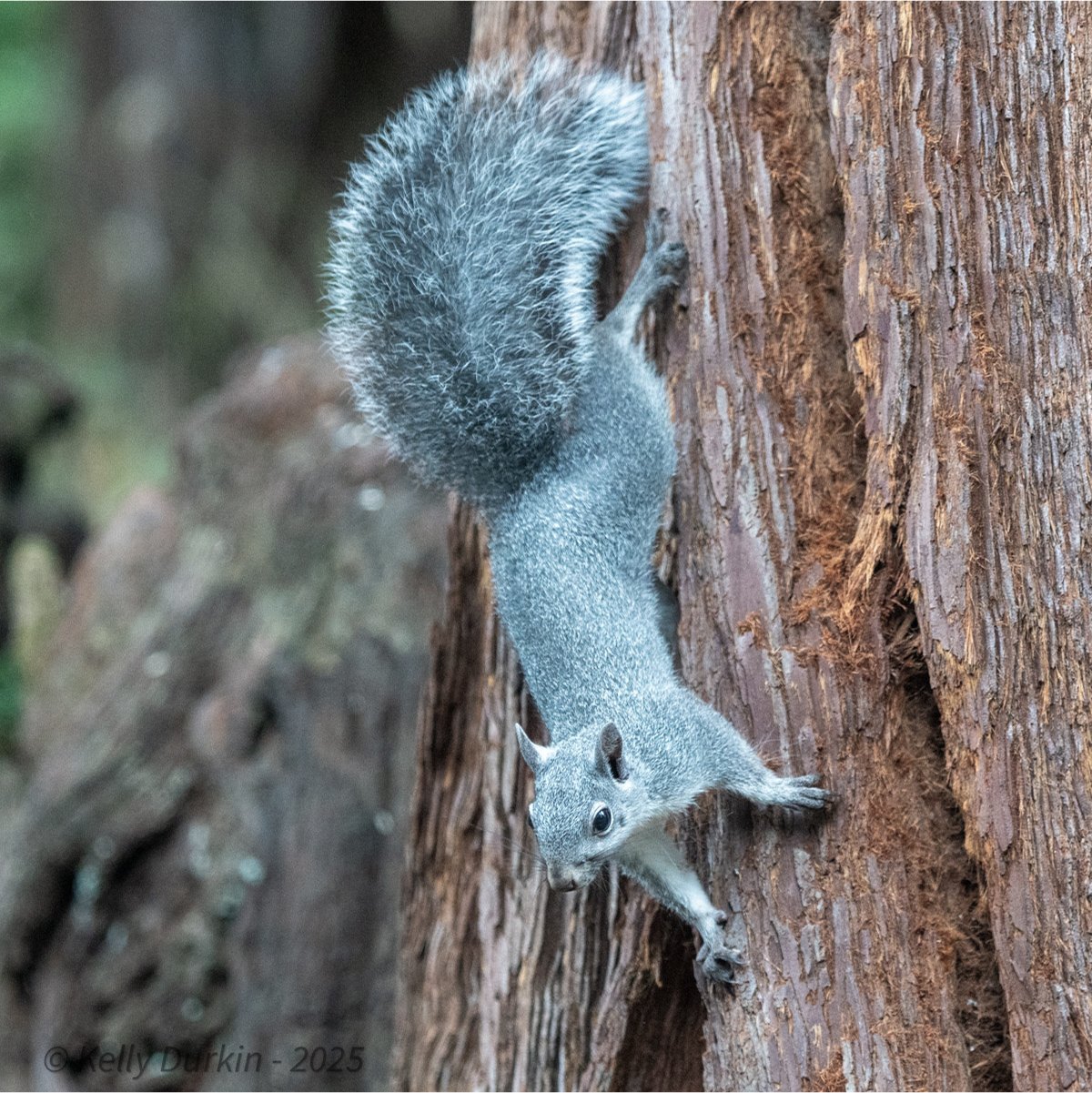
Western Gray Squirrel with a long, full, feathery silver-gray tail
Western Gray Long, feathery, frosted silver
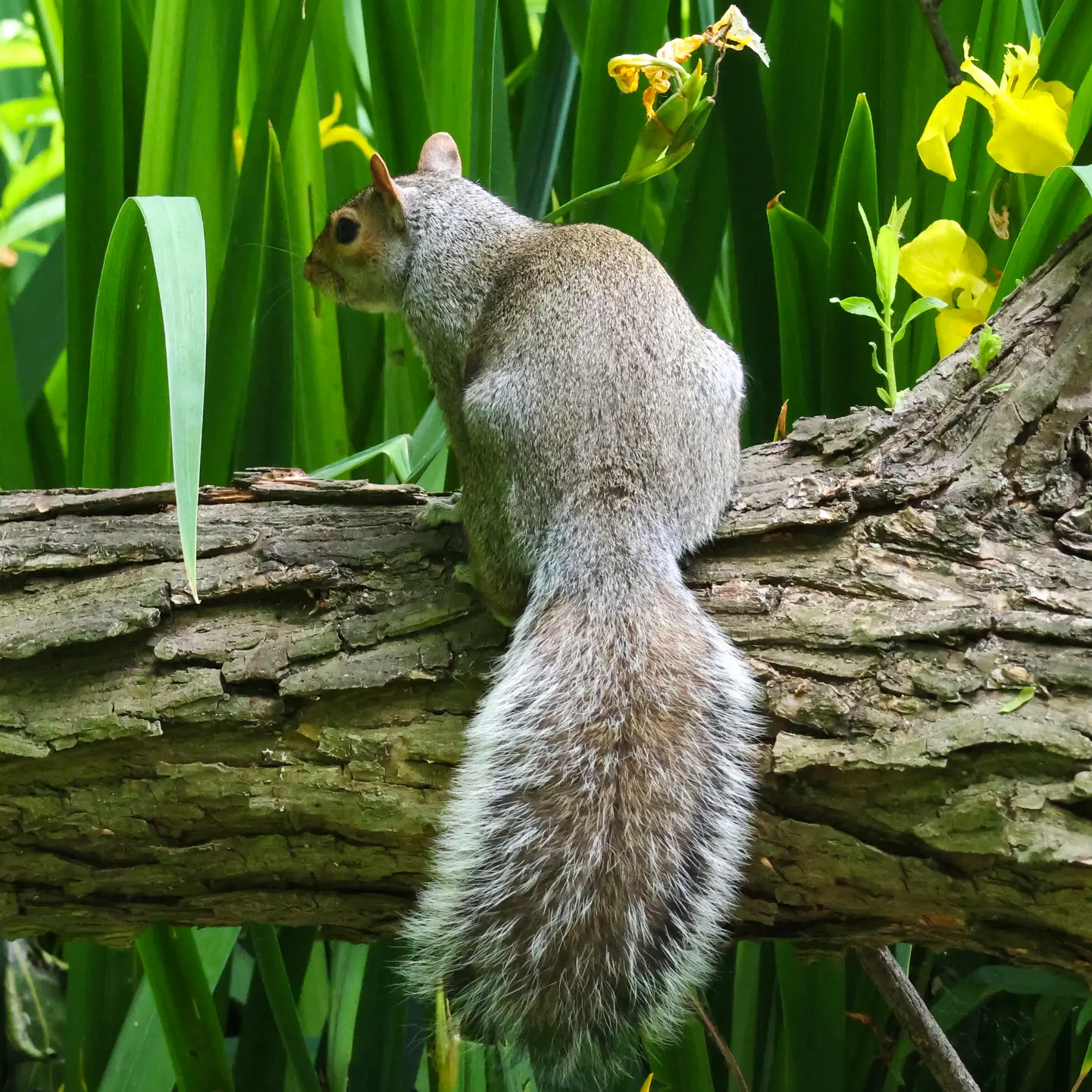
Eastern Gray Squirrel on a log, tail trailing behind — thinner and scruffier than the Western Gray, with white fringing
Eastern Gray Thinner, scruffier, white-fringed5
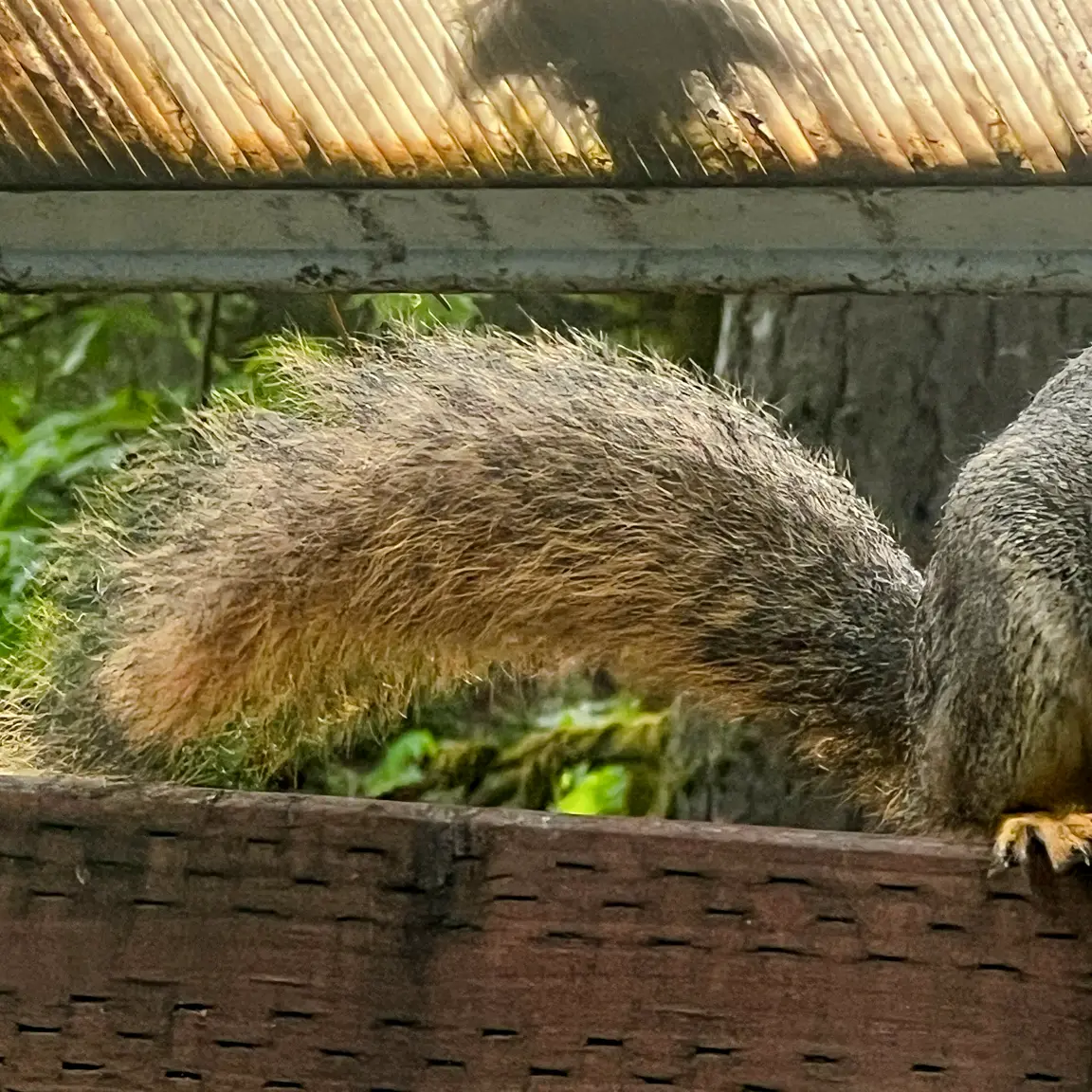
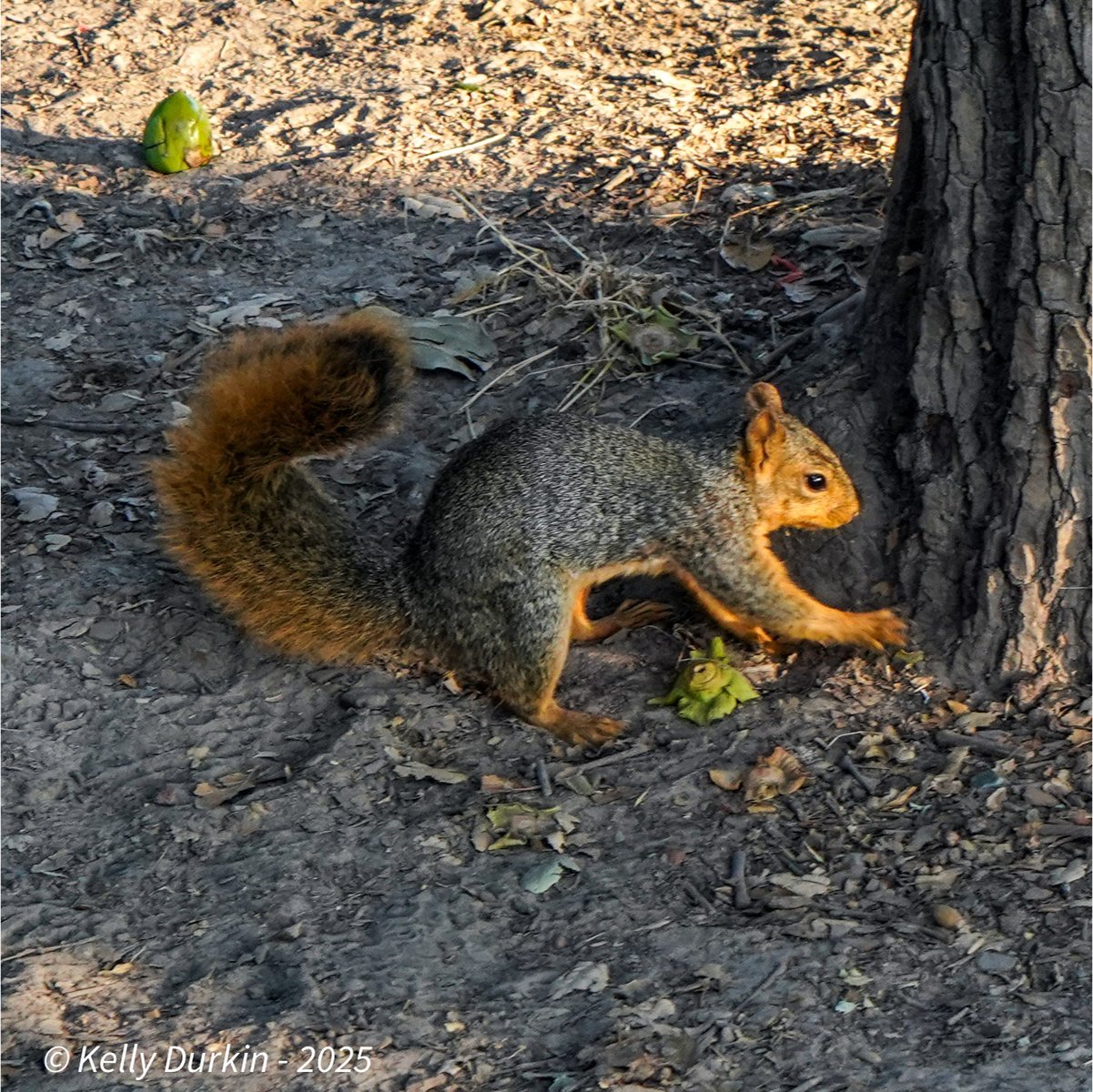
Fox Squirrel tail filling the frame — thick and bushy, rusty orange with dark banding
Fox Squirrel Thick, rusty orange with dark banding6
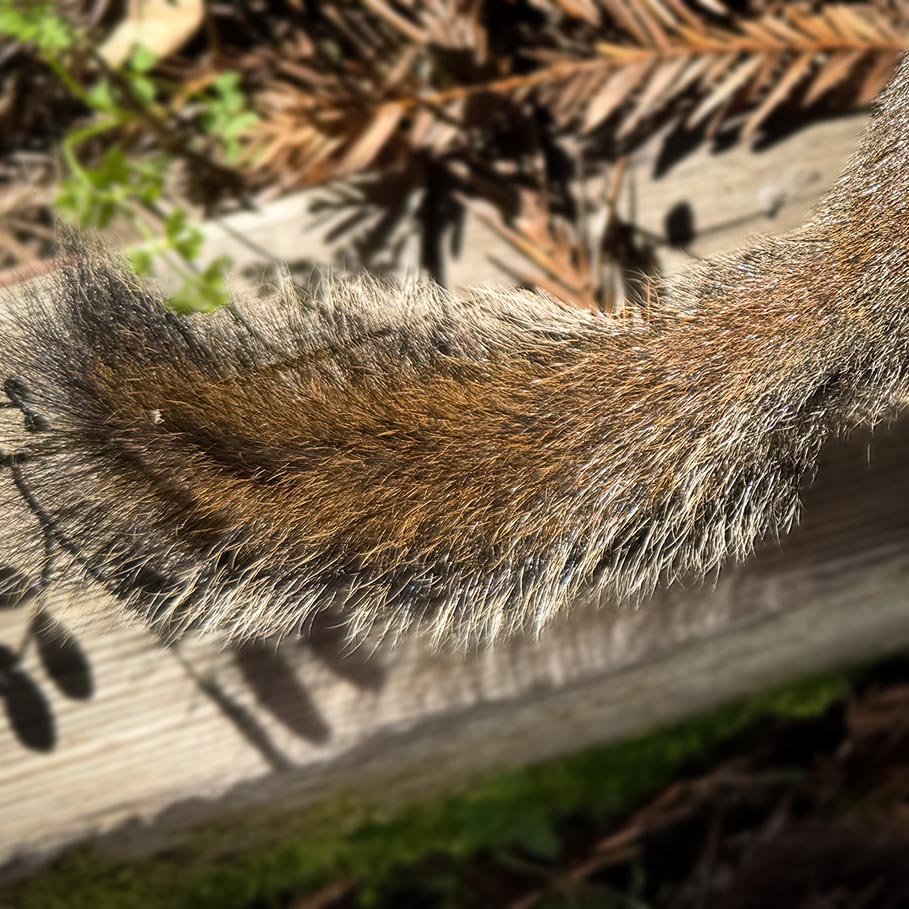
Douglas Squirrel tail, shorter and dark with pale edges
Douglas Shorter, dark with pale edges

Tail color and shape are useful field clues at a distance, but they are not absolute. Tails can be worn, backlit, molting, or unusually colored, so confirm with habitat, size, belly, and face when possible.

On the move

Western Gray Squirrel walking, low and elongated
Western Gray Quick, bounding, wary
Eastern Gray Squirrel walking across open ground
Eastern Gray Bounding; bold on the ground
Fox Squirrel ambling across the ground
Fox Squirrel Heavier, ambling gait
Douglas Squirrel moving along a branch
Douglas Fast, darting, vocal

The Confusion Pair

Western Gray vs. Eastern Gray

The two squirrels people actually mix up.

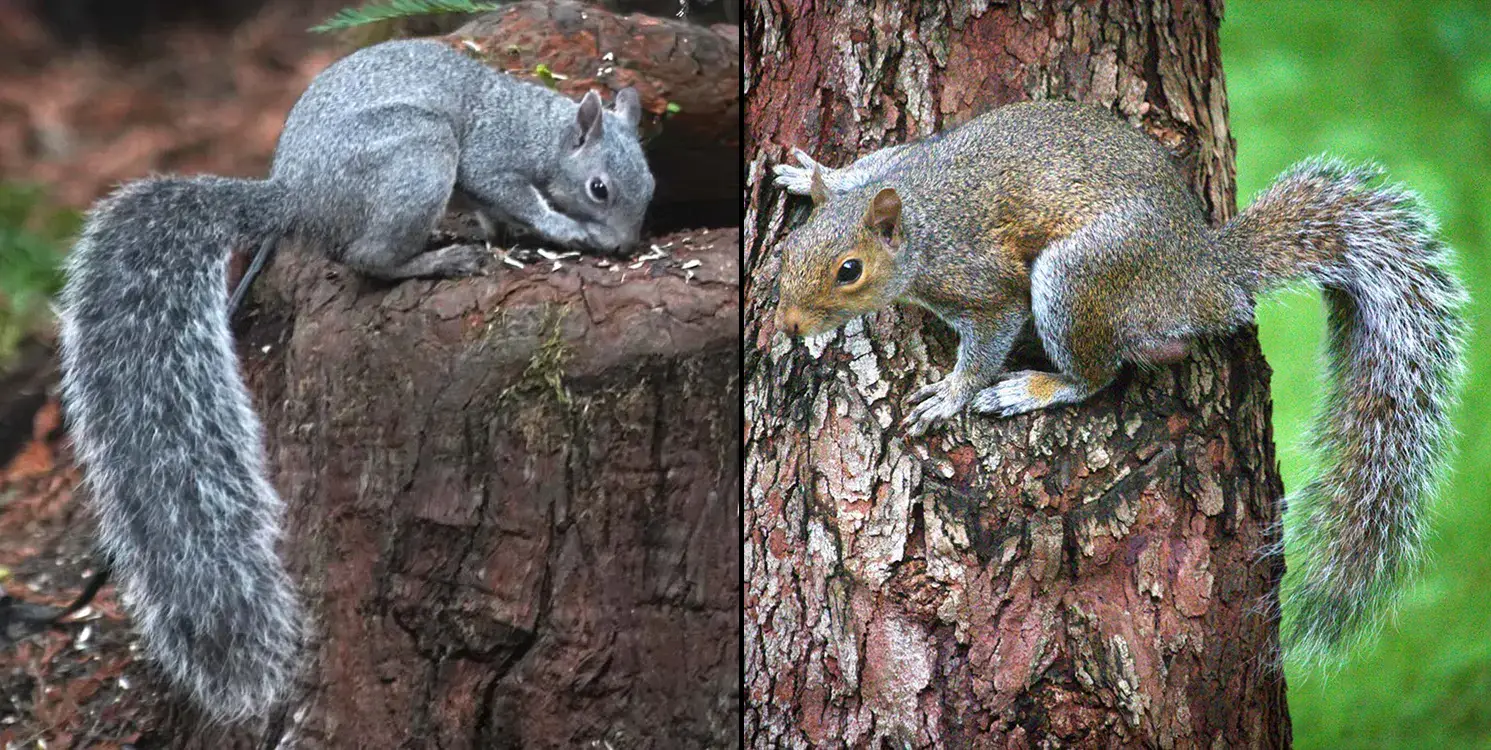
Side-by-side comparison: Eastern Gray Squirrel with warm brown tones and a thinner tail, and Western Gray Squirrel with a solid silver coat and a large feathery tail
Eastern Gray (left) and Western Gray (right).2

One species, many coats

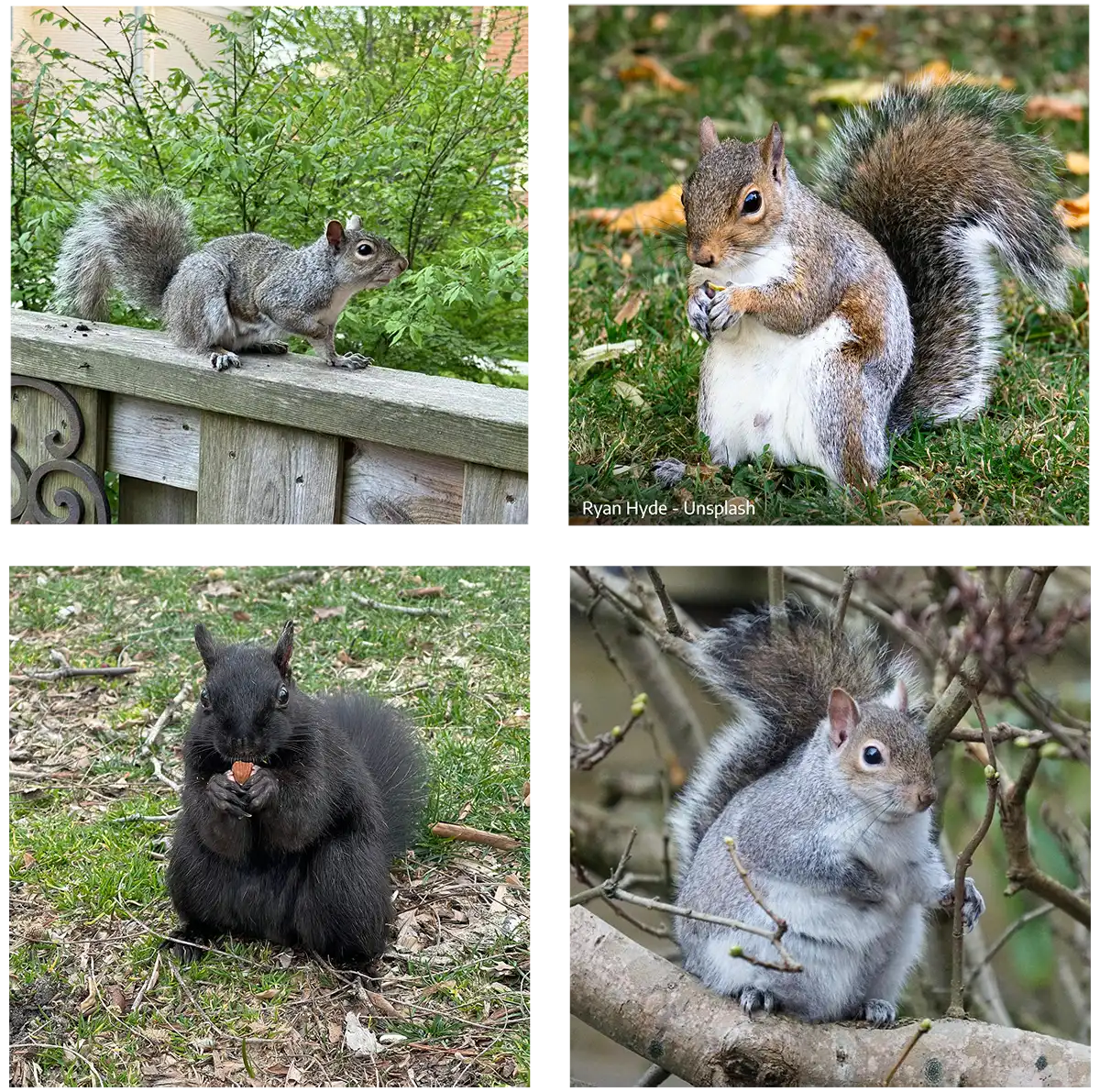
Four Eastern Gray Squirrels showing coat variation: typical gray, warm rufous-toned, all-black melanistic, and pale fluffy gray
All four of these are Eastern Grays — including the all-black (melanistic) form.1

Eastern Grays vary widely in coat color, including melanistic black individuals. That variation is one reason color alone can mislead. Use color together with face, size, habitat, and range.
Why Are Some Squirrels Black? →


Still Unsure?

Check the range map

Geography is powerful evidence. Some squirrels look surprisingly alike, and some individuals do not match field-guide examples. The range map can help you ask the first naturalist question: does this species usually occur where I am?

If the visible traits and the range map disagree, do not force the answer. Look again, compare more traits, and consider whether you may be seeing an unusual individual, an introduced animal, or a sighting worth documenting.

Open the interactive range map →


Side by Side

Compare All Four Species

See all four California tree squirrels side by side, including size, habitat, coloration, and identification clues.

Explore the Full Comparison Chart →


You Found It

Now meet your squirrel

Full profiles — range, ecology, stories, and status.

Western Gray Squirrel perched on a branch
Western Gray Native
Douglas Squirrel perched on a branch
Douglas Squirrel Native
Eastern Gray Squirrel perched on a branch
Eastern Gray Introduced
Fox Squirrel sitting upright on a branch
Fox Squirrel Introduced

Photo Credits

  1. Eastern Gray Squirrel photographs by Ryan Hyde, via Unsplash.
  2. Eastern Gray (left panel) photographer not yet confirmed; Western Gray (right panel) Tree Squirrels of California.
  3. Douglas Squirrel seasonal pair: photographs by P. Holroyd and Toby, via iNaturalist (CC BY).
  4. Douglas Squirrel face close-up: Evelyn Lazzaretti, via iNaturalist (CC BY).
  5. Eastern Gray Squirrel tail: foxsu, via iNaturalist (CC BY).
  6. Fox Squirrel tail: M. Karmartsang, via iNaturalist (CC BY).

The Fox Squirrel profile photo (Meet Your Squirrel section) is via Unsplash (photographer to be confirmed). All other photographs are from the Tree Squirrels of California collection.