
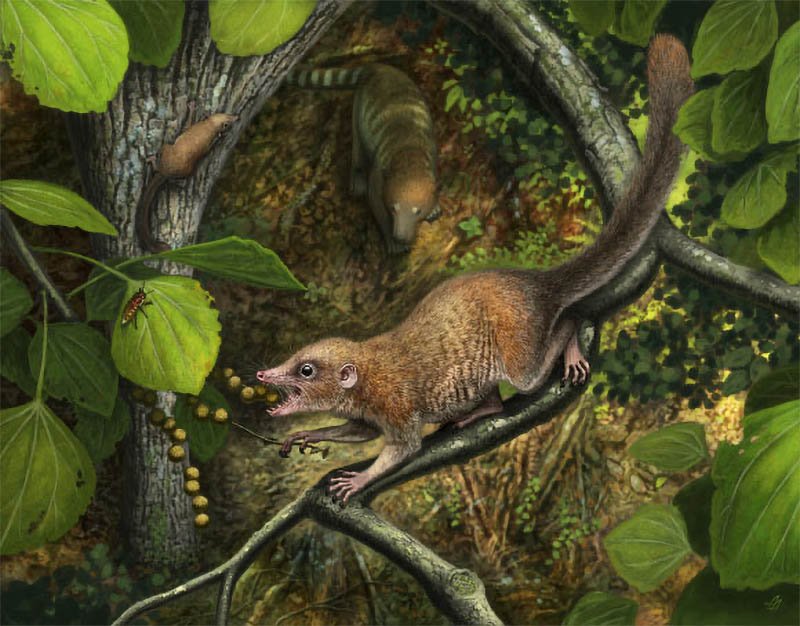
About 66 million years ago, an asteroid struck Earth near what is now Mexico’s Yucatán Peninsula.
The impact helped trigger the mass extinction that ended the age of the non-avian dinosaurs.
Mammals survived. Squirrels would not appear for tens of millions of years, but their story begins deep in that surviving mammal family tree.
Squirrels are part of the world that followed.
This is a reconstruction based on fossil and anatomical evidence, not a claim that this exact animal was the ancestor of squirrels or humans.
Relationship
So where do squirrels fit?
Squirrels and humans are very distant relatives. Both belong to a large branch of placental mammals called Euarchontoglires.
One side, called Glires, includes rodents and rabbits. Squirrels are rodents.
The other side, Euarchonta, includes primates. Humans are primates.
The shared ancestry is extremely ancient. This diagram follows only two paths through a much larger family tree.
A simple family tree
- GliresRodents, rabbits, and their relatives
- RodentiaThe rodent branch
- SquirrelsOne part of Rodentia
- EuarchontaPrimates and their close relatives
- PrimatesThe primate branch
- HumansOne part of Primates
Relationship source: University of Reading, Cole Museum of Zoology, “Euarchontoglires.”
66 million years ago
What the impact did
The asteroid struck near Chicxulub, on the coast of the Yucatán Peninsula. Rock and dust thrown into the atmosphere sharply reduced sunlight. Forests were damaged, plant growth fell, and food chains on land were severely disrupted.
Scientists call this the K-Pg extinction, after the boundary between the Cretaceous and Paleogene periods. It ended the age of the non-avian dinosaurs, meaning every dinosaur group except the birds.
Mammals already existed before the impact. The survivors entered a radically changed world with new dangers and open ecological roles. The extinction is a turning point in the mammal story, not the moment mammals or squirrels first appeared.
An active question
When did placental mammals begin?
Scientists do not agree on the exact timing. One influential 2013 study led by Maureen O’Leary placed the ancestor of today’s placental mammals, and the major groups that came from it, after the asteroid impact.
Other genetic studies place some of the deepest splits earlier, or spread them across the extinction. Fossils and DNA do not always give exactly the same timeline. That uncertainty is a normal part of science.
Study discussed: O’Leary et al. (2013), “The placental mammal ancestor and the post-K-Pg radiation of placentals.” Its chronology is presented here as one influential reconstruction within a continuing debate.
Much later
When do squirrels appear?
True squirrels appear much later. The fossil record places recognizable members of the squirrel family tens of millions of years after the asteroid impact.
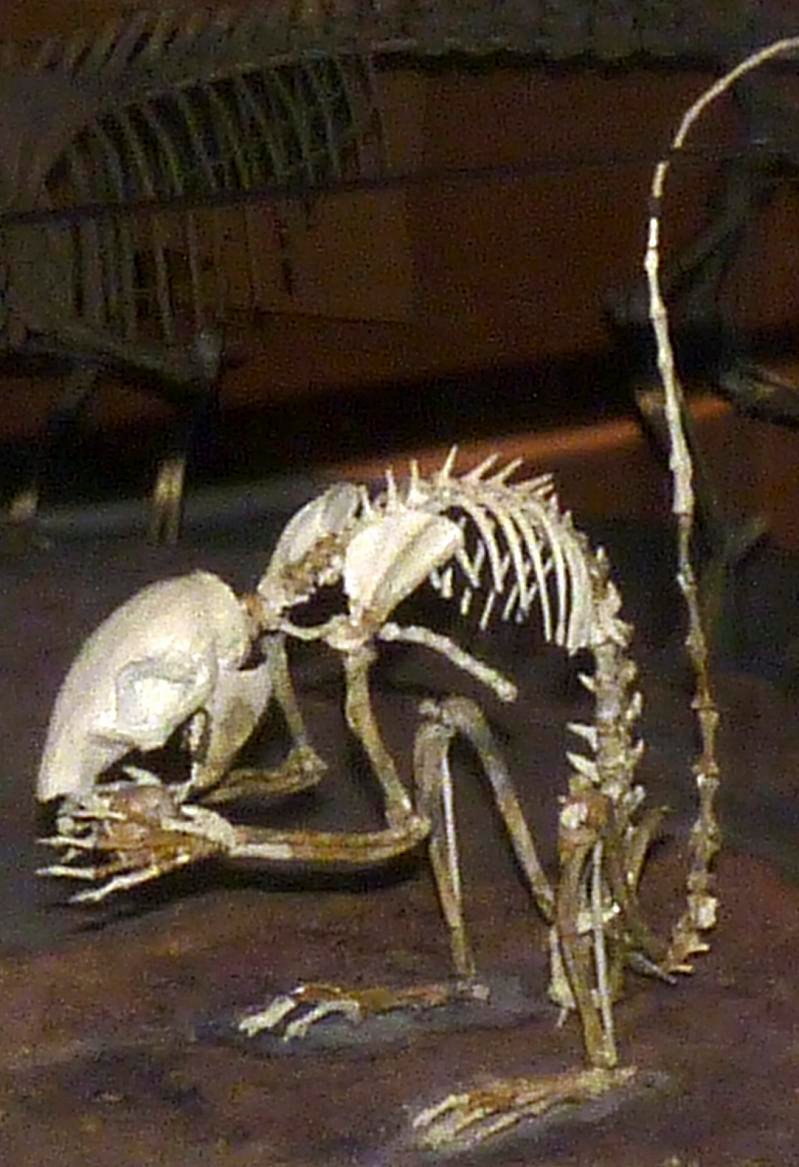
This is Douglassciurus jeffersoni. The Smithsonian record places it in the late Eocene, in rock of the White River Formation, collected in Natrona County, Wyoming. The record files it in Sciuridae, the squirrel family.
That places this animal close to thirty million years after the impact. Its long tail and overall build already look recognizably squirrel-like.
The Smithsonian record also lists the earlier published name Protosciurus jeffersoni. Fossil names can change as researchers reexamine specimens and their relationships.
Specimen and record: Smithsonian National Museum of Natural History, Department of Paleobiology, catalog no. 3385086. Geologic age, stratigraphy, locality, and family placement are as given in that record, which cites Emry and Thorington 1982, Smithsonian Contributions to Paleobiology no. 47, and Emry and Korth 2012, Journal of Vertebrate Paleontology 32(2): 419–432.
Possible advantages
What may have helped small mammals survive?
No single trait explains survival. Researchers consider combinations of body size, shelter, activity, diet, reproduction, and chance. Several traits may have helped some small mammals cope with a world that changed quickly.
- Small sizeLess food was needed, and small hiding places were available.
- Shelter near the groundBurrows and crevices may have buffered sudden changes at the surface.
- Activity in low lightSenses suited to dim conditions may have remained useful.
- A flexible dietAnimals able to use different foods may have had more options.
Post-impact ecology
The fungi connection
With sunlight reduced and forests damaged, dead plant material built up. Fungi and other decomposers, organisms that break down dead material, became important parts of food webs that also supported insects and other invertebrates.
Small mammals with flexible diets may have used several parts of those food webs, including insects and perhaps fungi. This is ecological context, not evidence that fungi alone explain how mammals survived.
Modern ecology
Modern squirrels and fungi
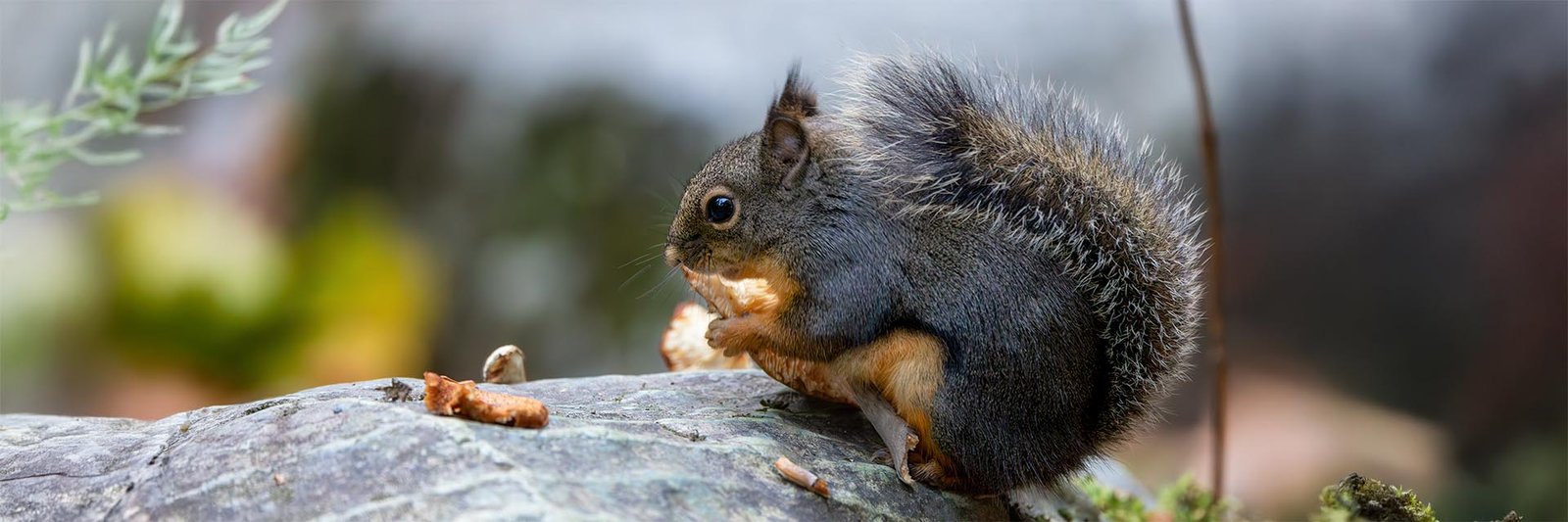
Some squirrels, including Douglas Squirrels, eat mushrooms and truffles. Fungal spores can pass through their digestive systems and be spread in their droppings. Many of these fungi live in partnerships with tree roots. Douglas Squirrels are also reported to hang mushrooms in branches to dry before storing them.
This modern relationship is interesting on its own. It is not evidence that today’s squirrels preserve unchanged behavior from the world after the impact.
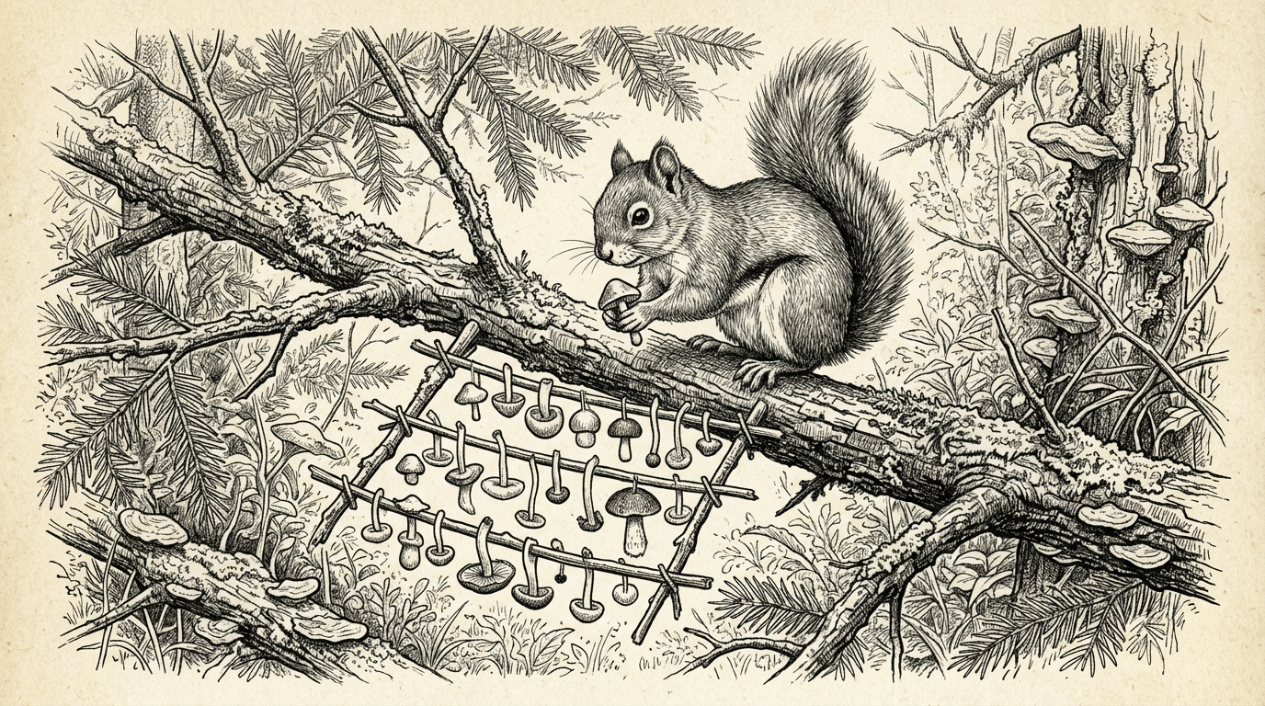
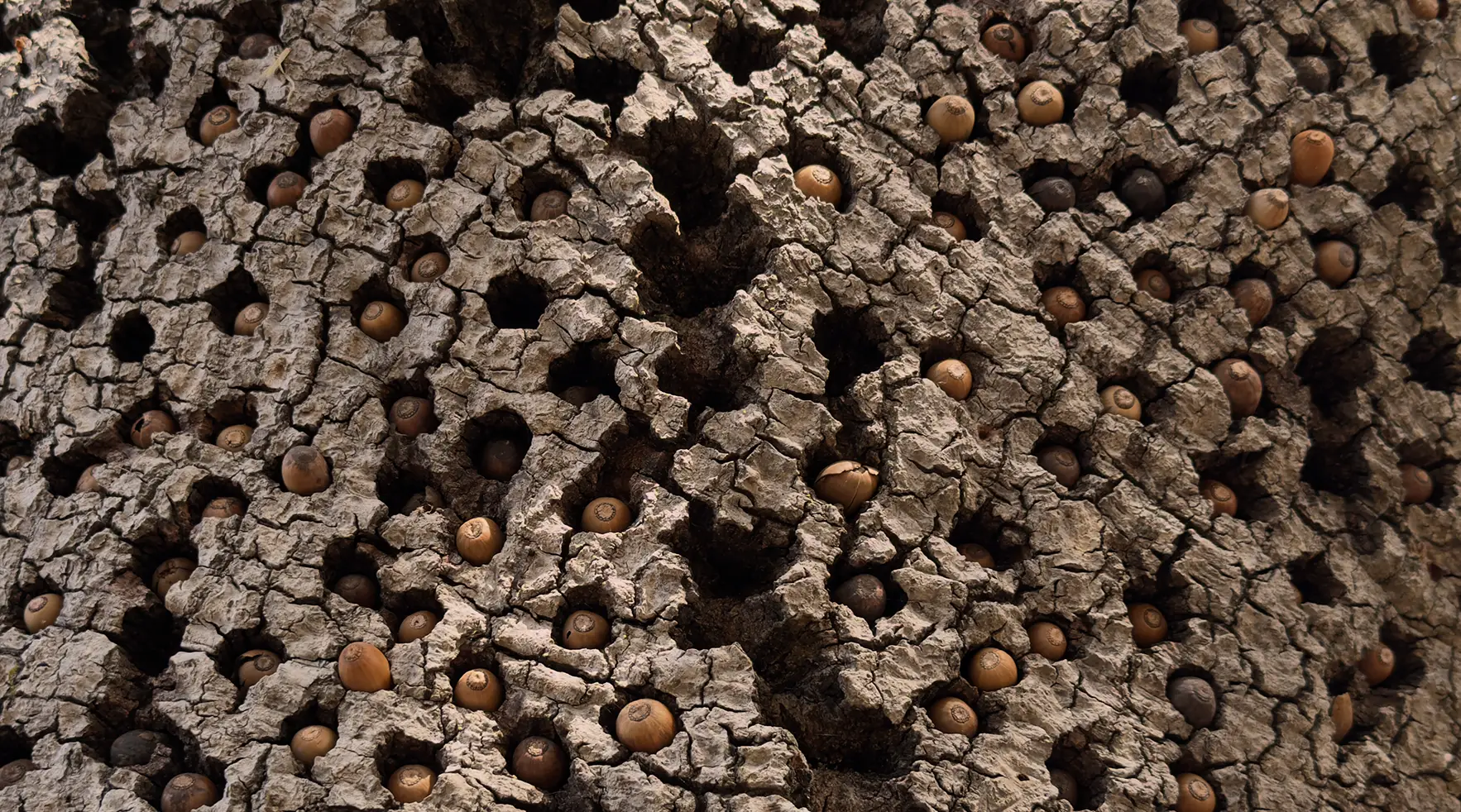
Image Credits
- Early placental mammal reconstruction: Illustration by Andrey Atuchin, under CC BY 4.0
- Douglassciurus jeffersoni skeleton: Smithsonian National Museum of Natural History, Department of Paleobiology, catalog no. 3385086, CC0
- Douglas Squirrel holding a mushroom: Unsplash; photographer to be confirmed
- Squirrel with mushroom racks: Kelly Durkin, generated with Veo
- Acorn Woodpecker granary tree: Kelly Durkin
Images are credited by number. Select the number beside an image to jump to its credit.