
Your guide to knowing which squirrel you are looking at...
| Native | Introduced | ||
|---|---|---|---|
| Douglas | Western | Eastern | Fox |
| Smallest | Medium | Medium | Largest |
| 10–14 inches | 17–24 inches | 16–21 inches | 20–27 inches |
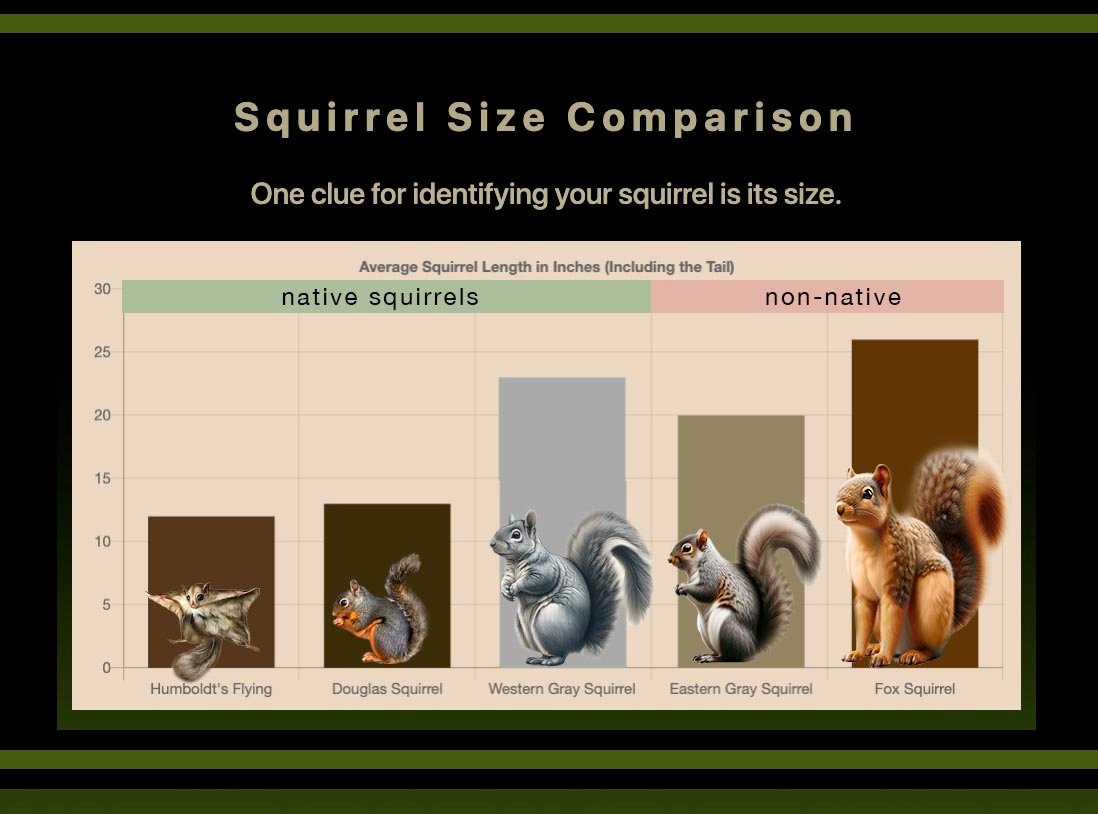
The Douglas squirrel (and flying squirrel) are noticeably smaller and easily distinguished from the others. In addition, the flying squirrel is not technically a tree squirrel and is nocturnal.
Douglas Squirrels are the smallest of the western tree squirrels— roughly half the size of the other three North American species.
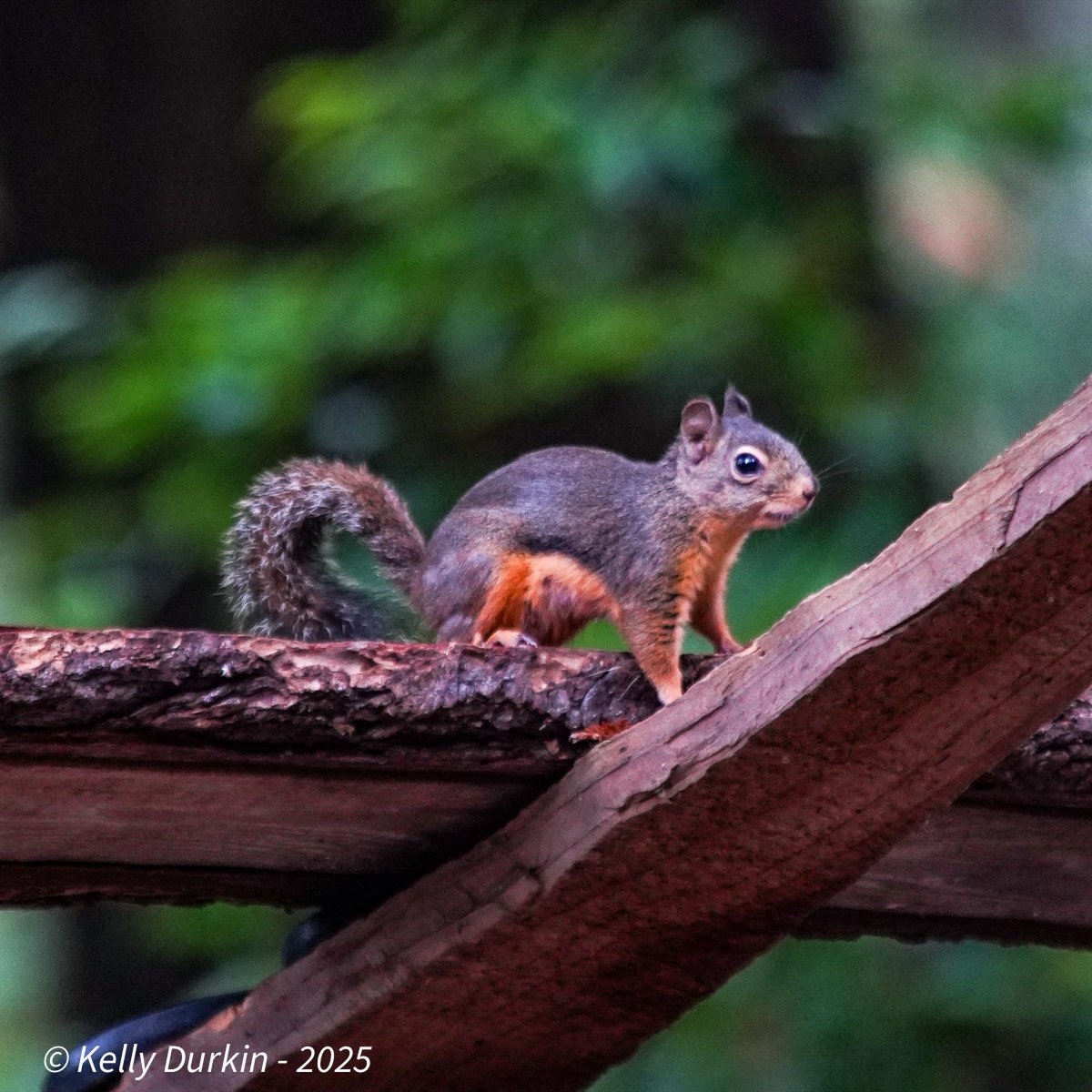
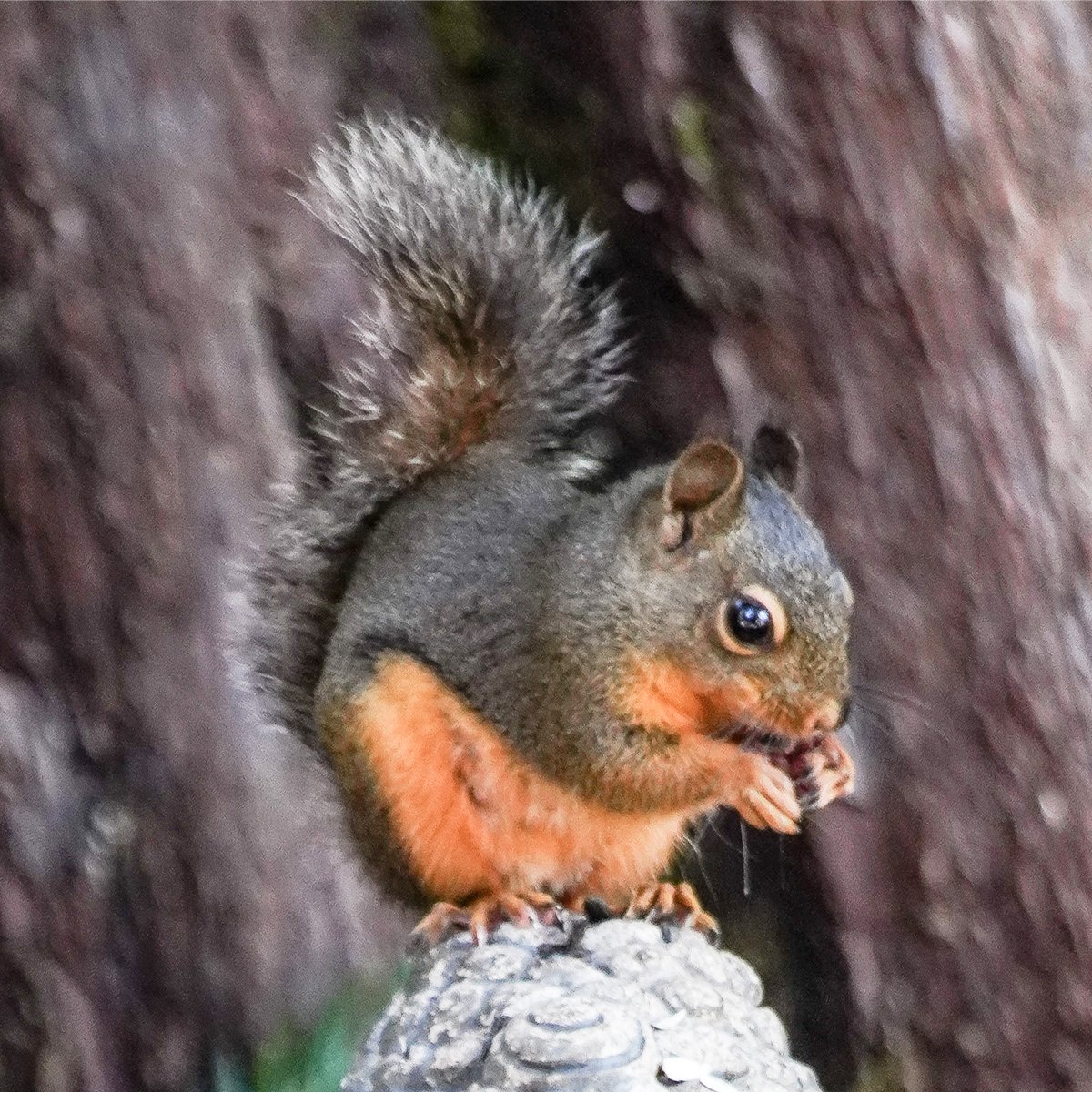
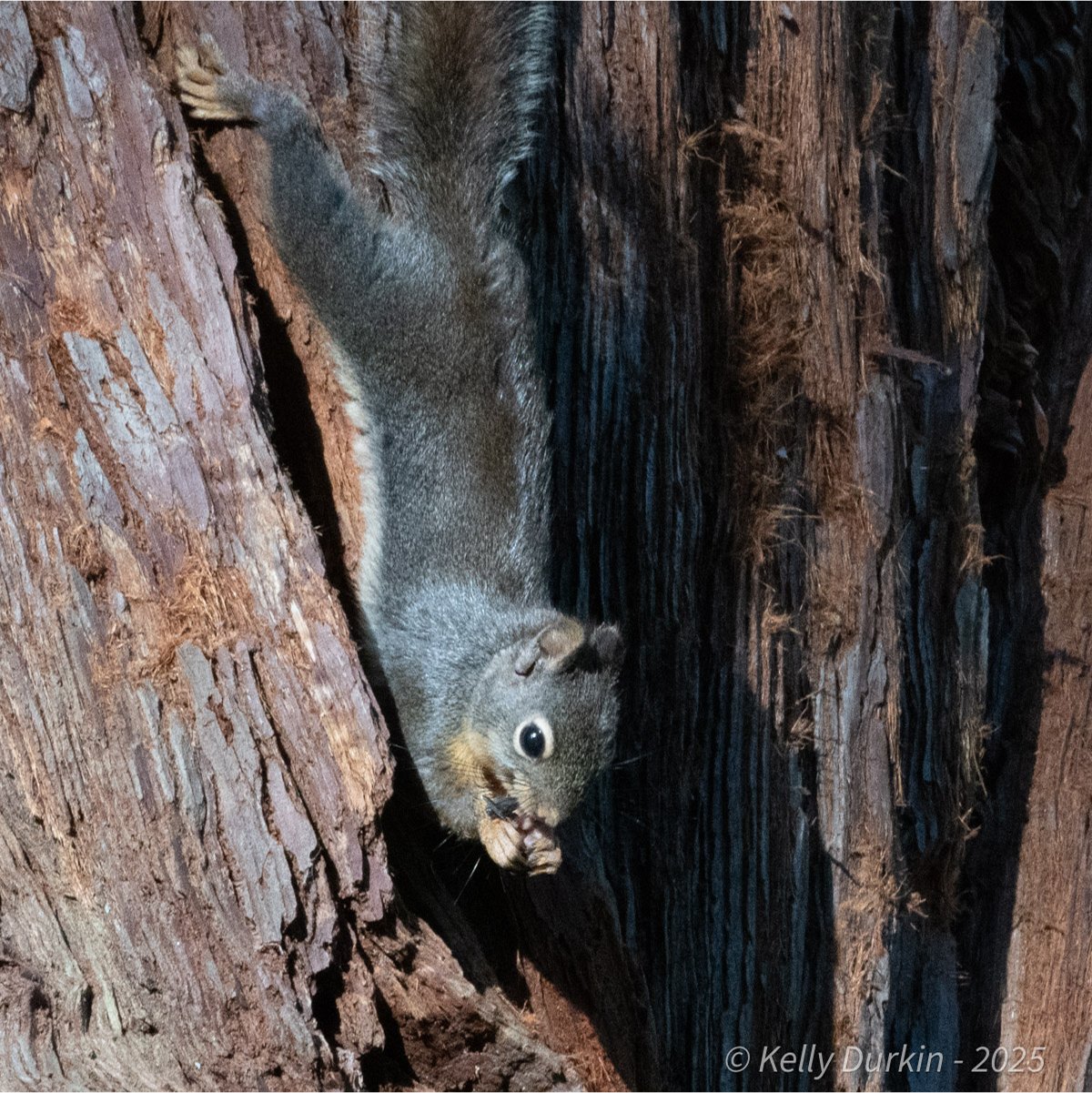
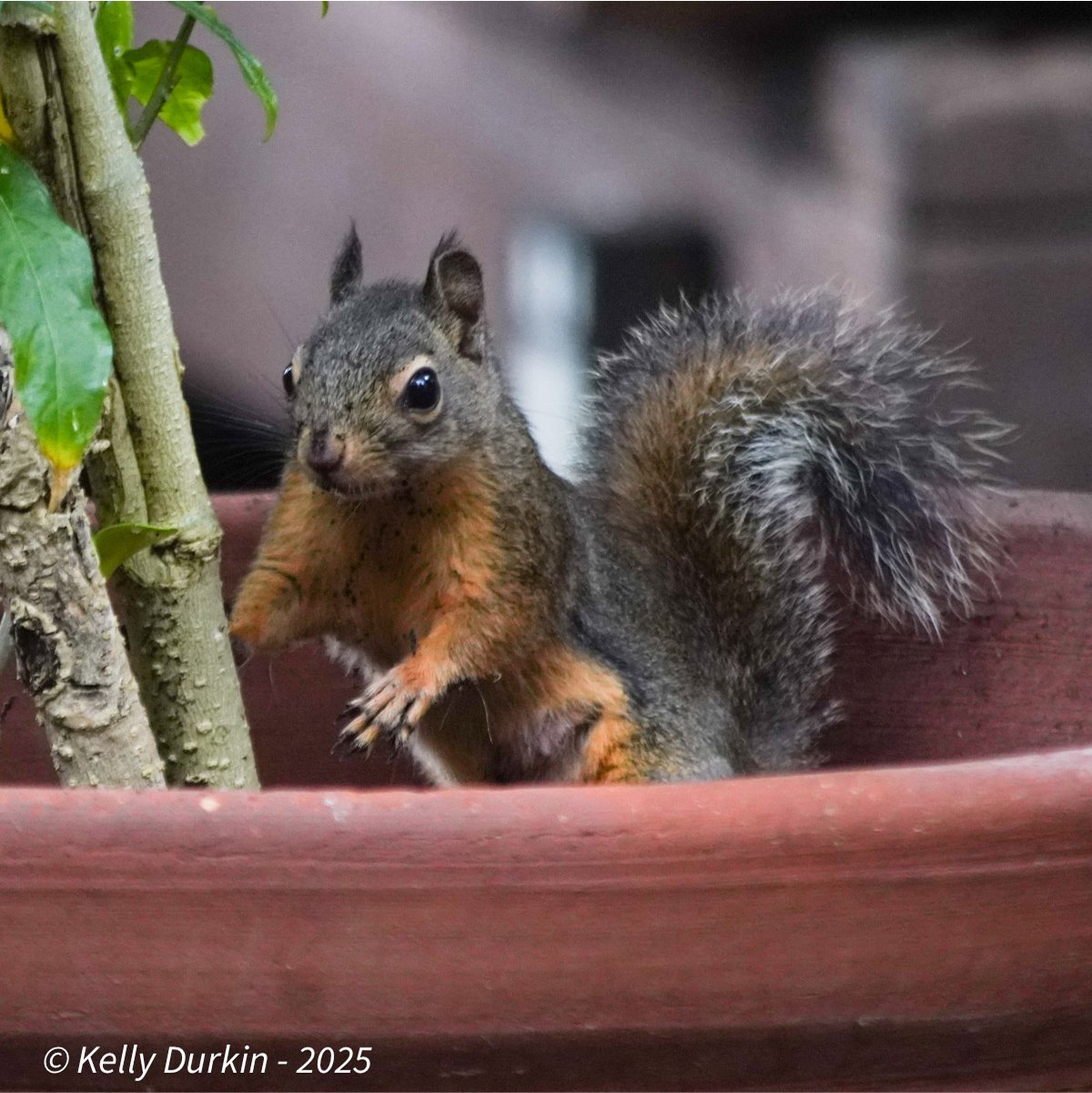
Four Douglas Squirrels


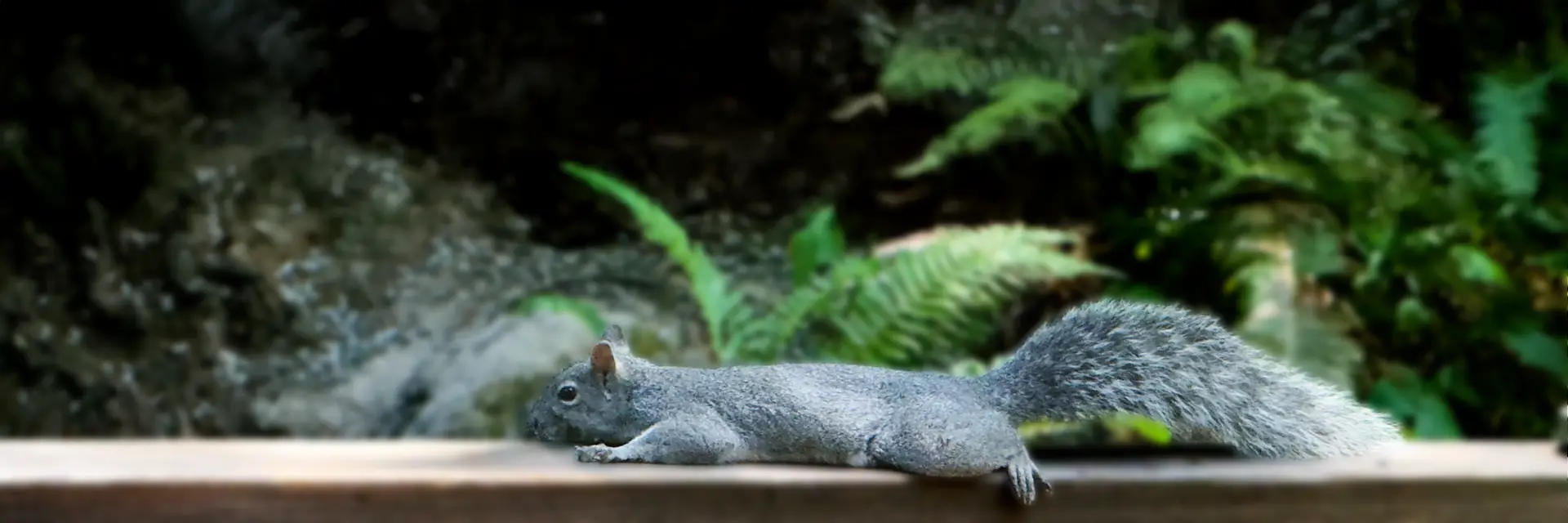
Western Gray squirrels are one solid steel gray tone — from nose to tail (dorsal fur).
Eastern Gray squirrels are highly varied and can have mottled gray, black or multi-toned dorsal fur.
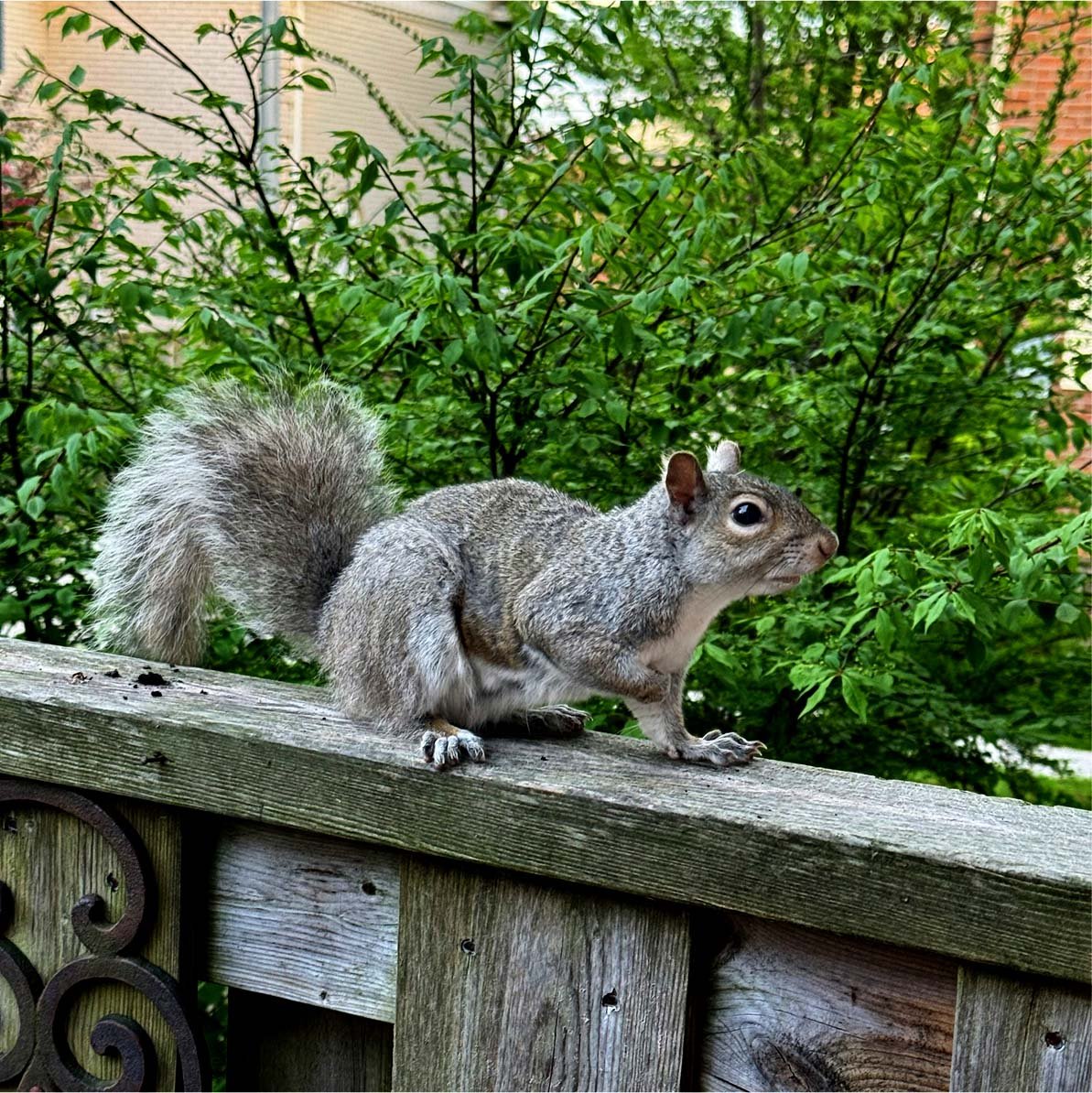
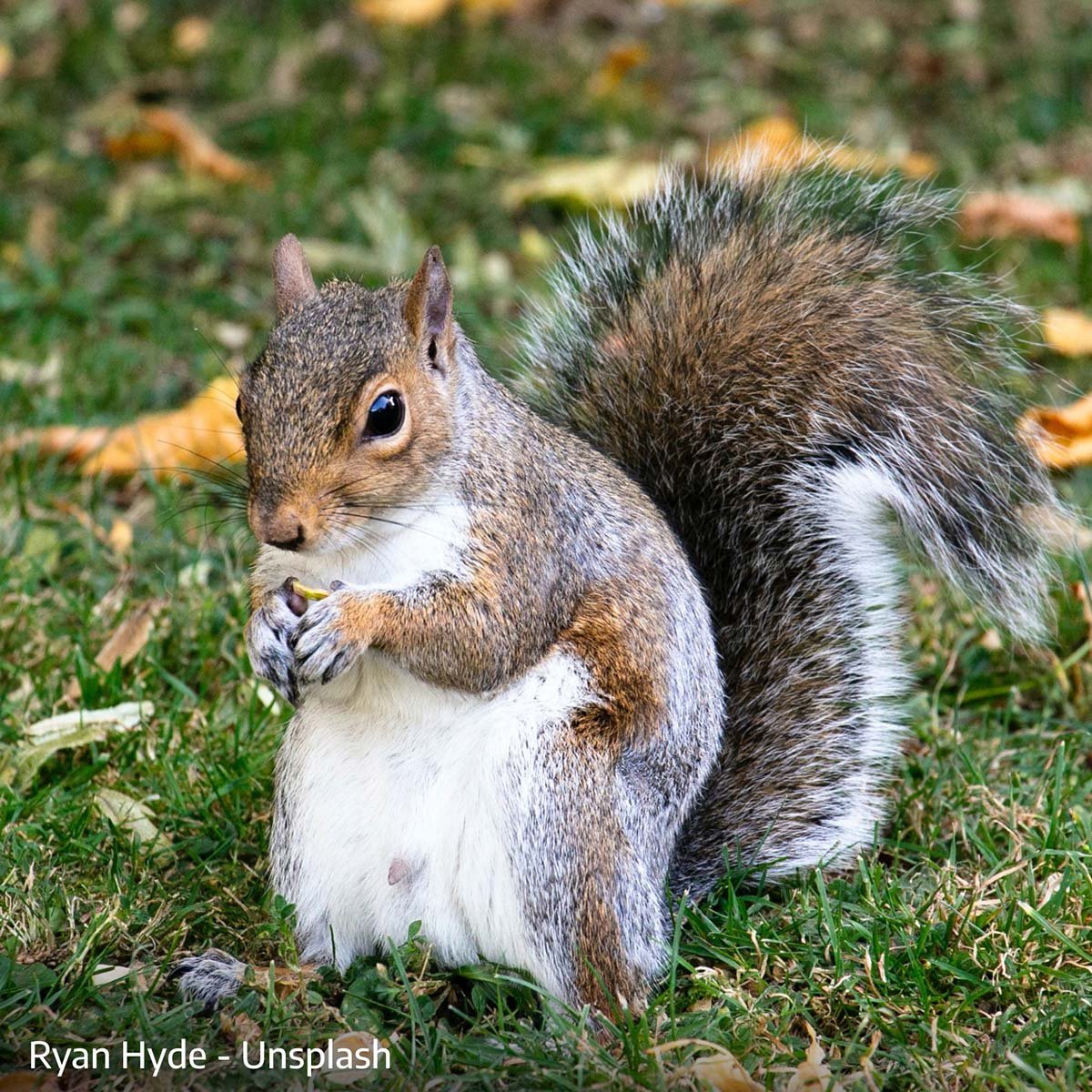
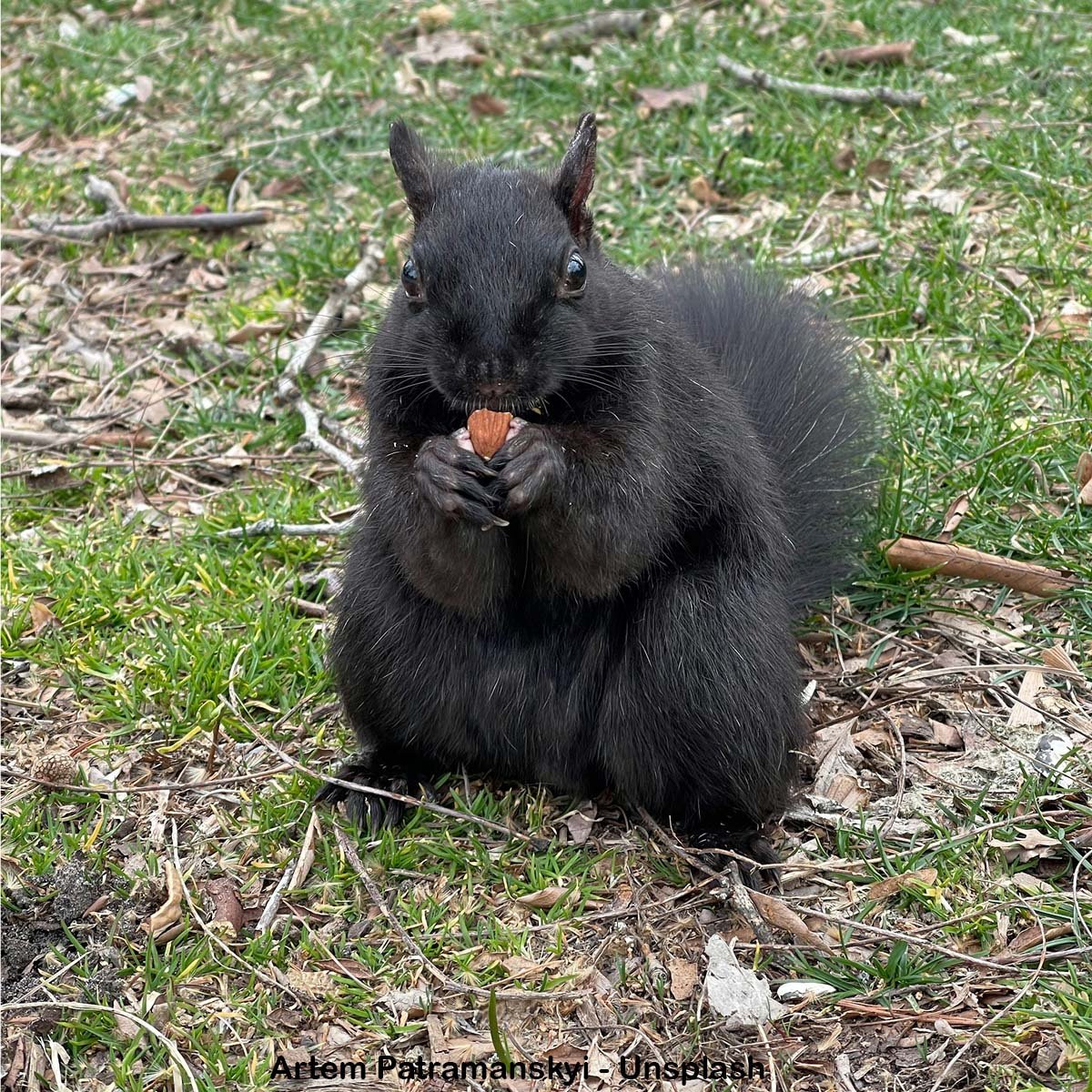
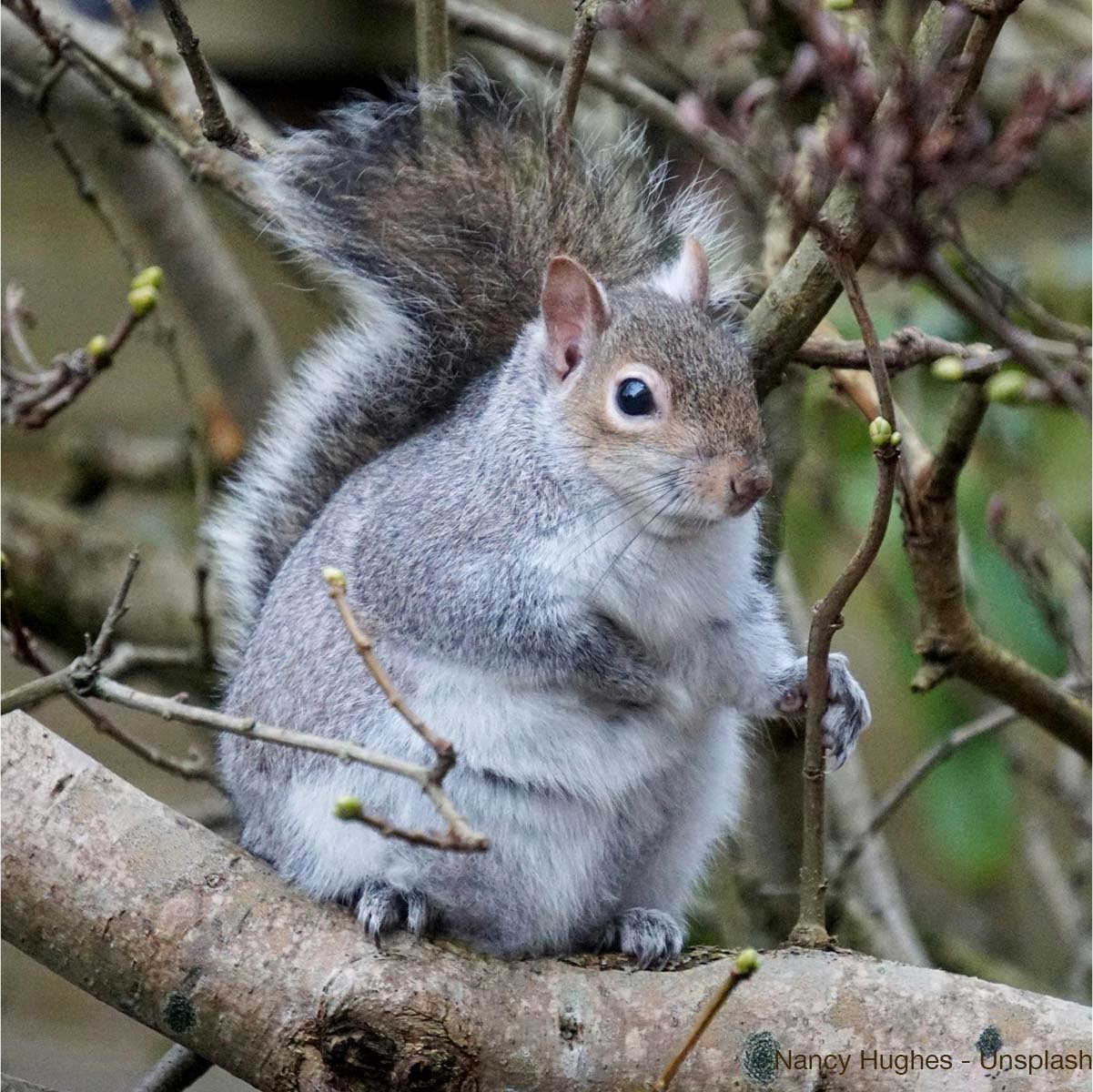
Four Eastern Gray Squirrels
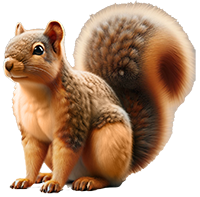
Fox Squirrels have grizzled charcoal gray dorsal fur.
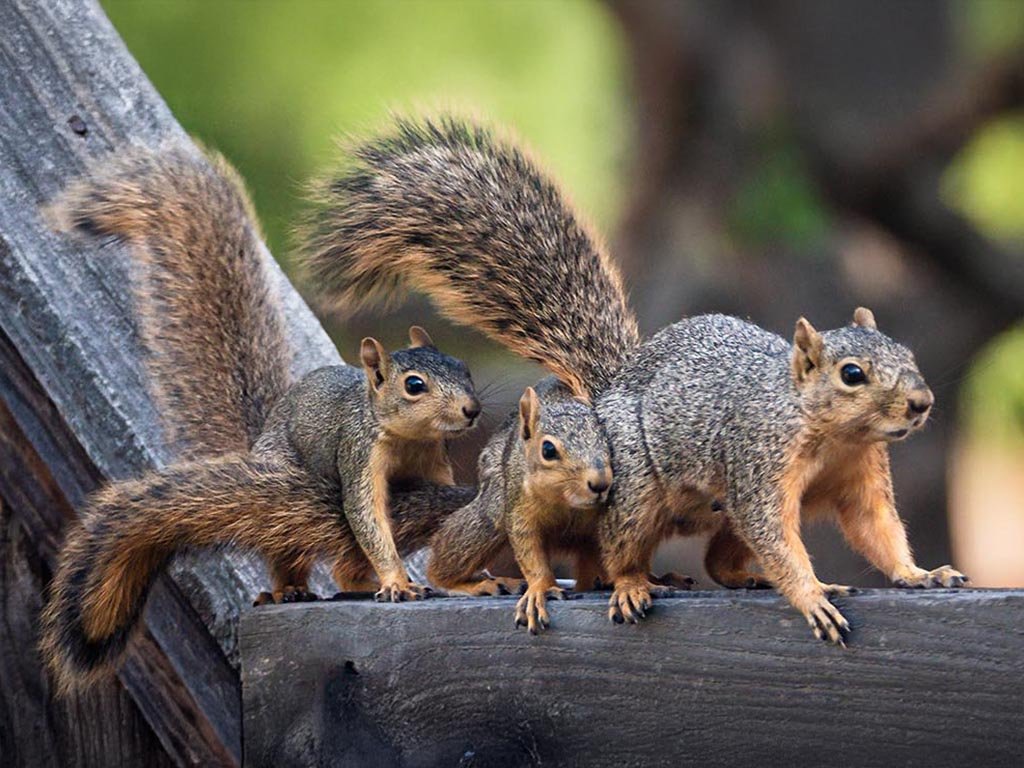
Behavior differs too: Western Grays are shy and mostly arboreal; Eastern Grays are bolder and navigate fences and roofs; the Fox Squirrel is comfortable almost anywhere, often foraging on the ground.
The grays share a quick, bounding gait. Fox squirrels tend to amble with a heavier, lazier cadence.
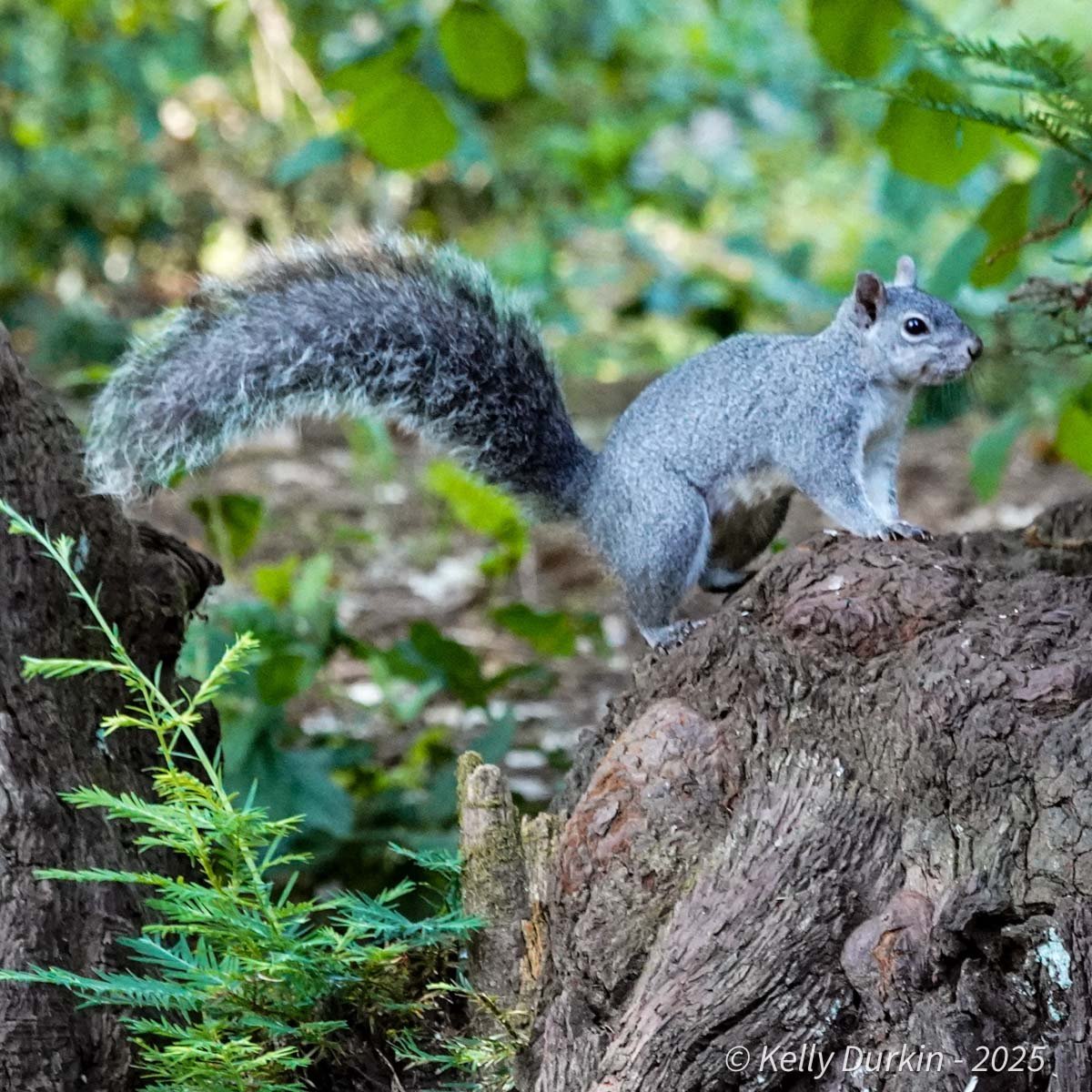
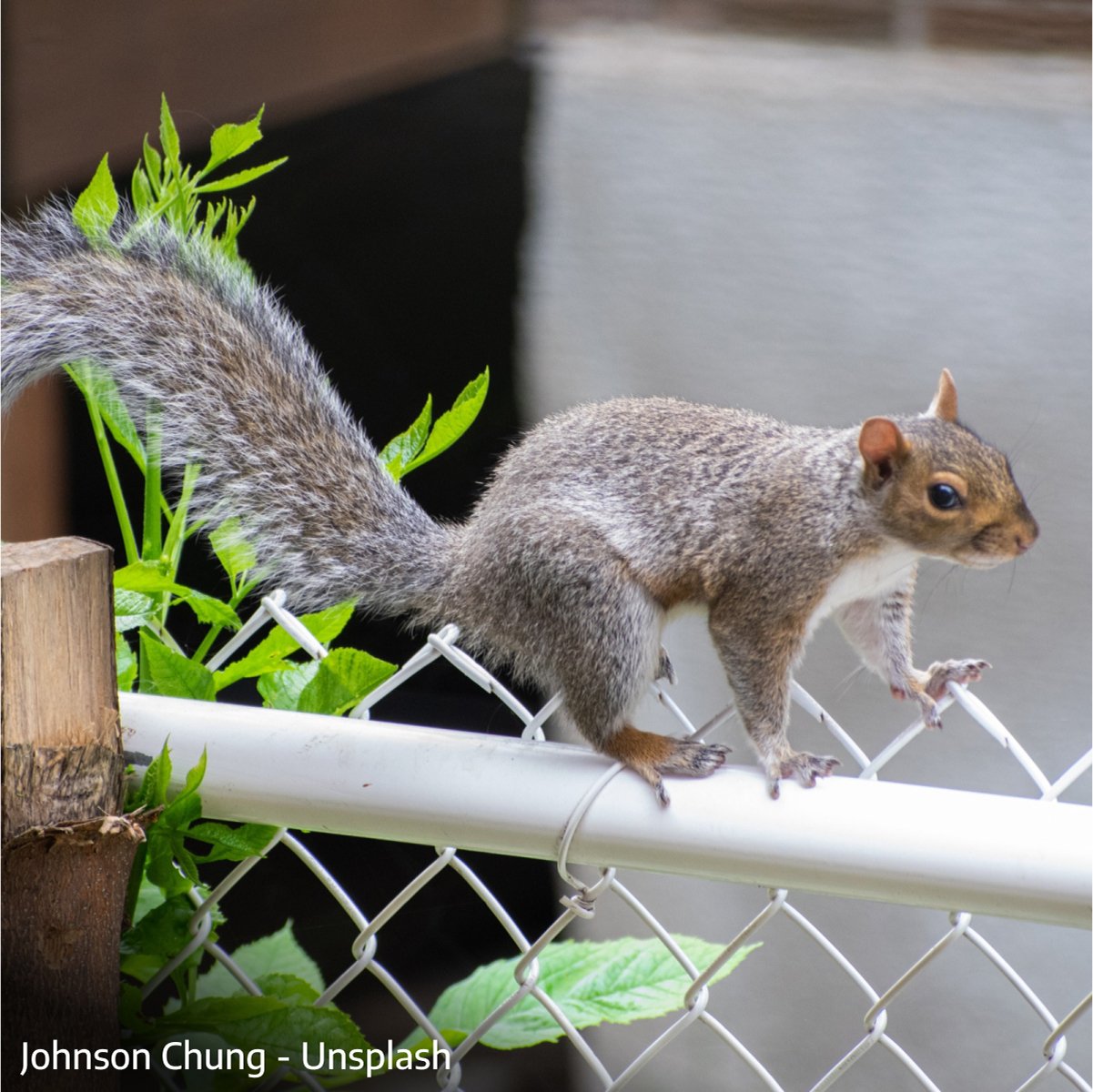
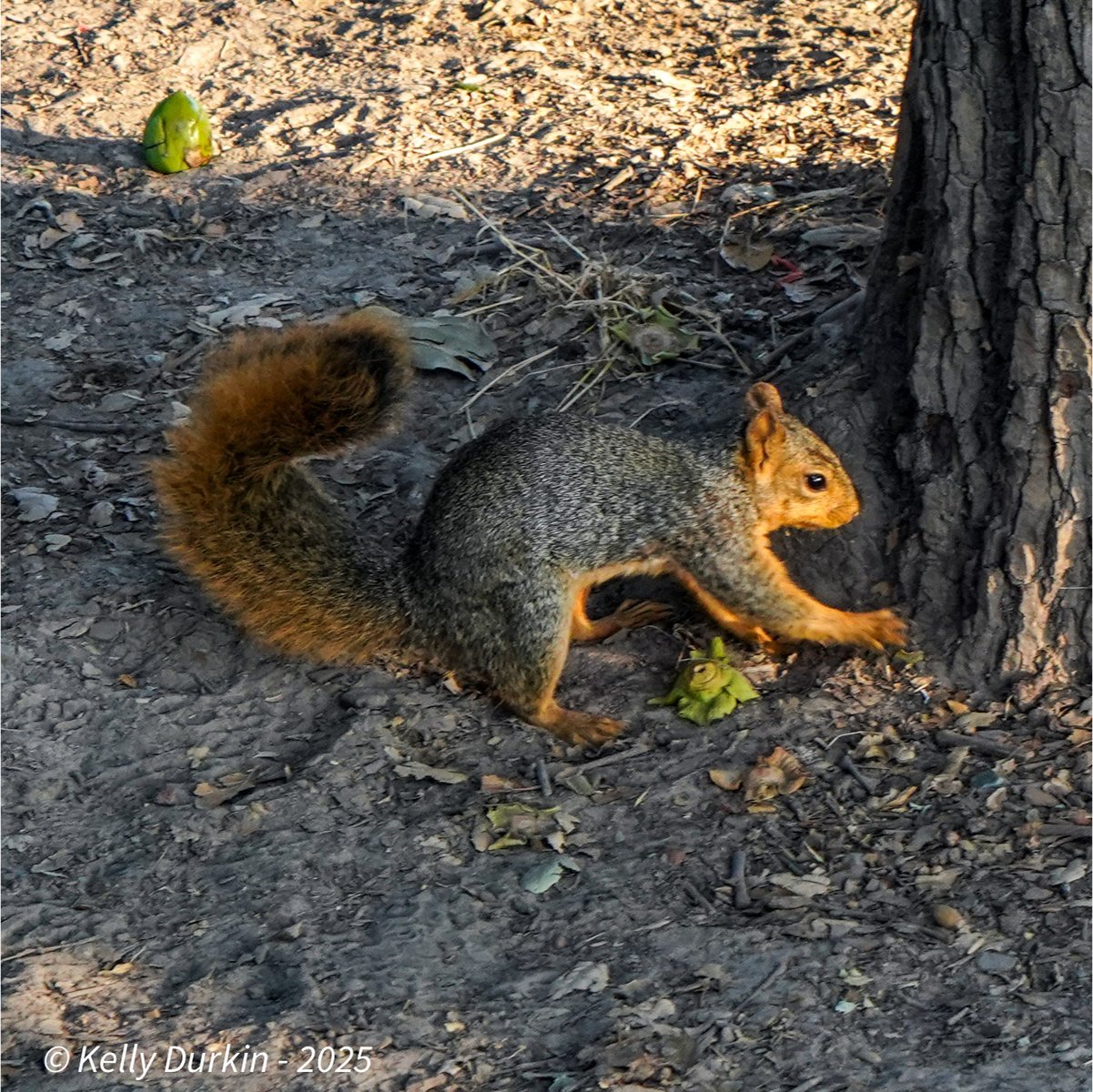
Western Gray, Eastern Gray, and Fox Squirrel
Fox Squirrels have an orange belly. Both Western and Eastern Gray squirrels show a white belly.
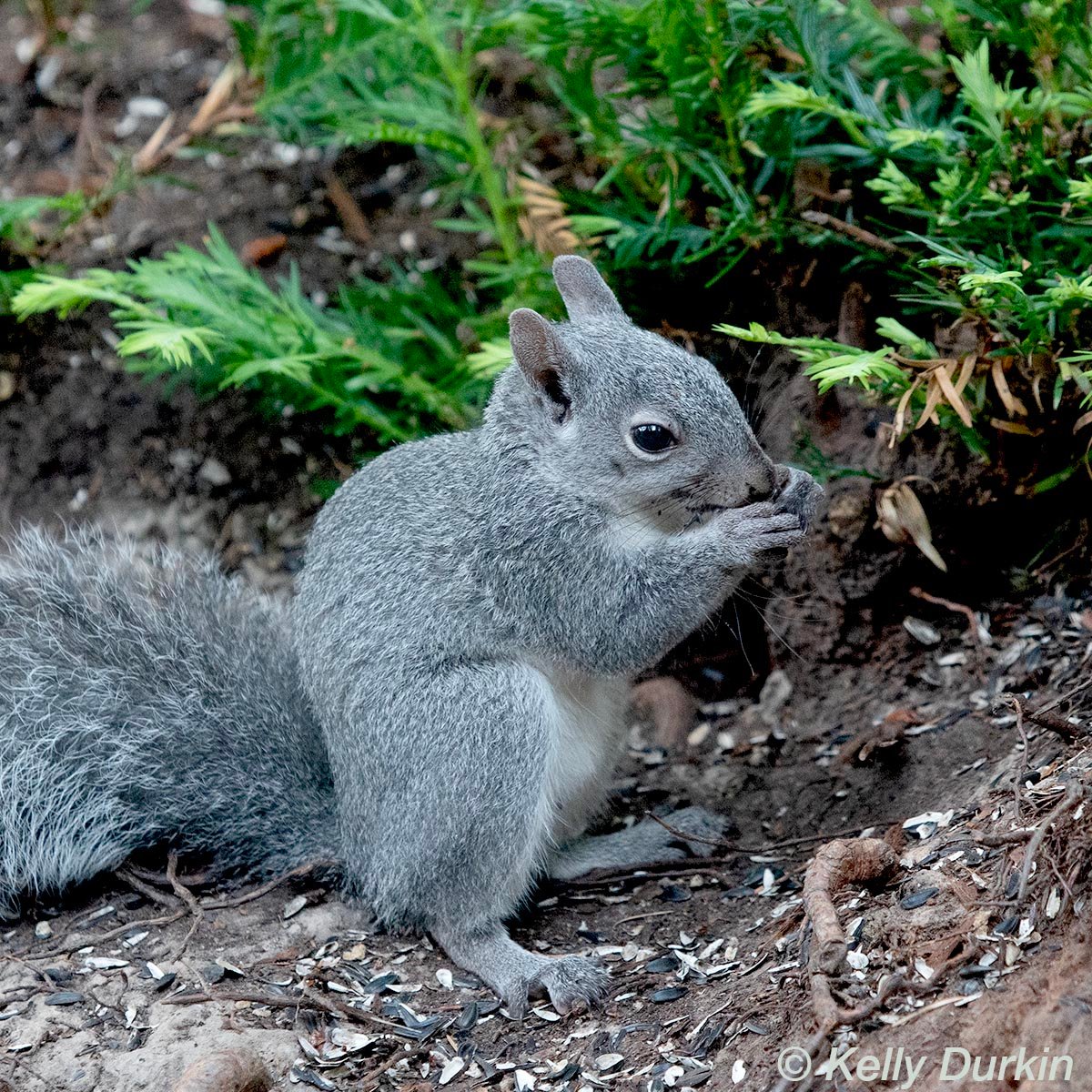
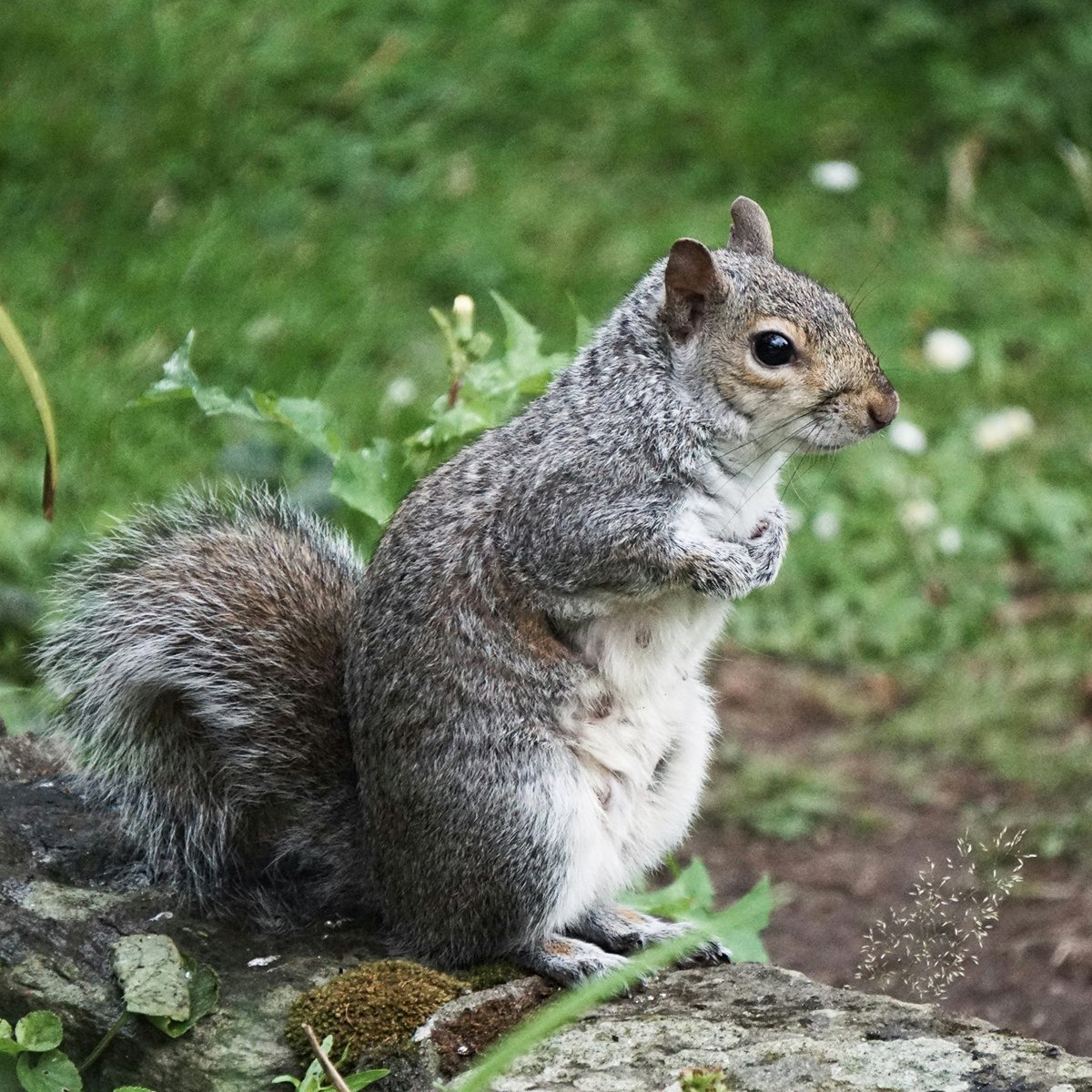
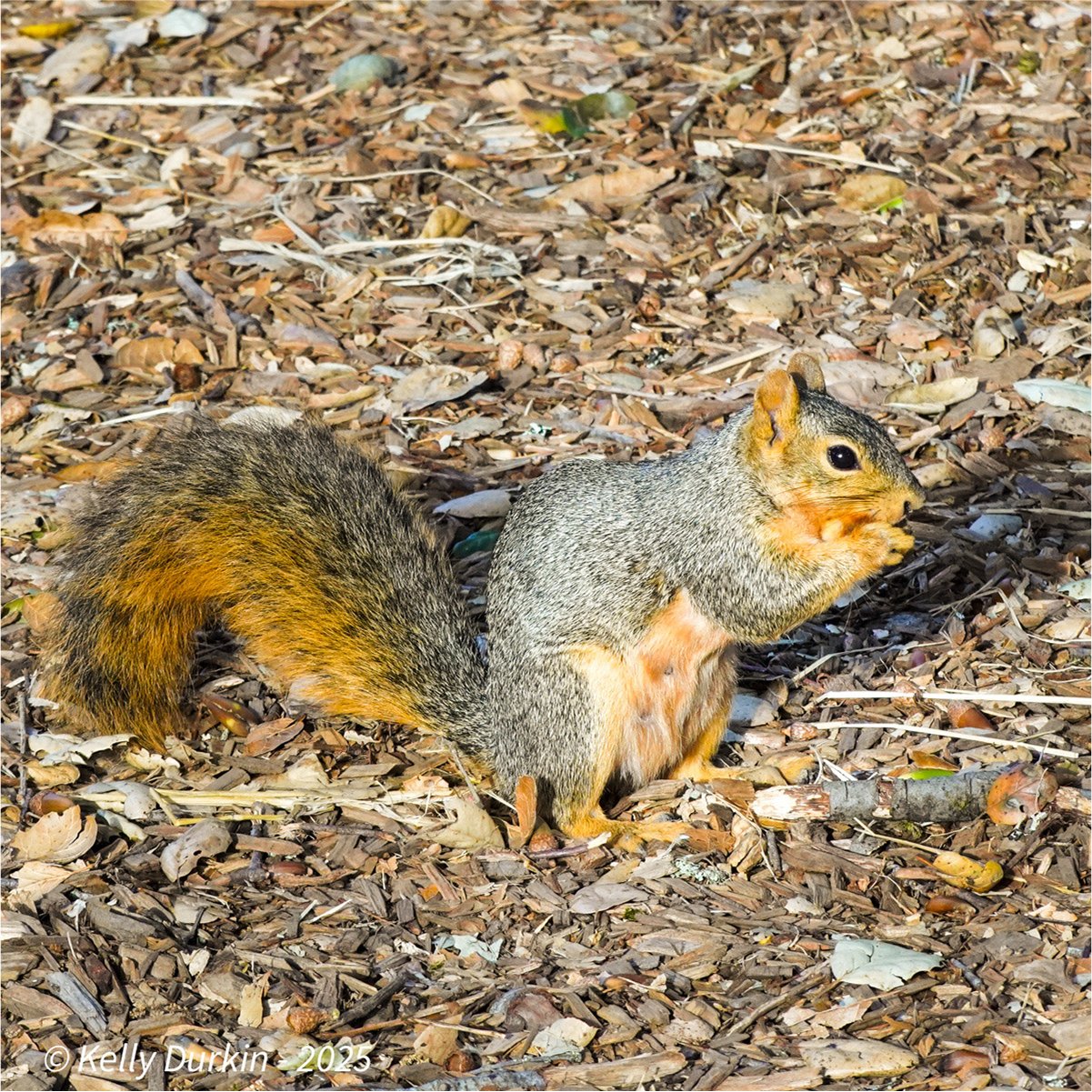
Western Gray, Eastern Gray, and Fox Squirrel
Western Gray lacks the brown/rufous fur around the eyes that is typical of the Eastern Gray and the Fox Squirrel.
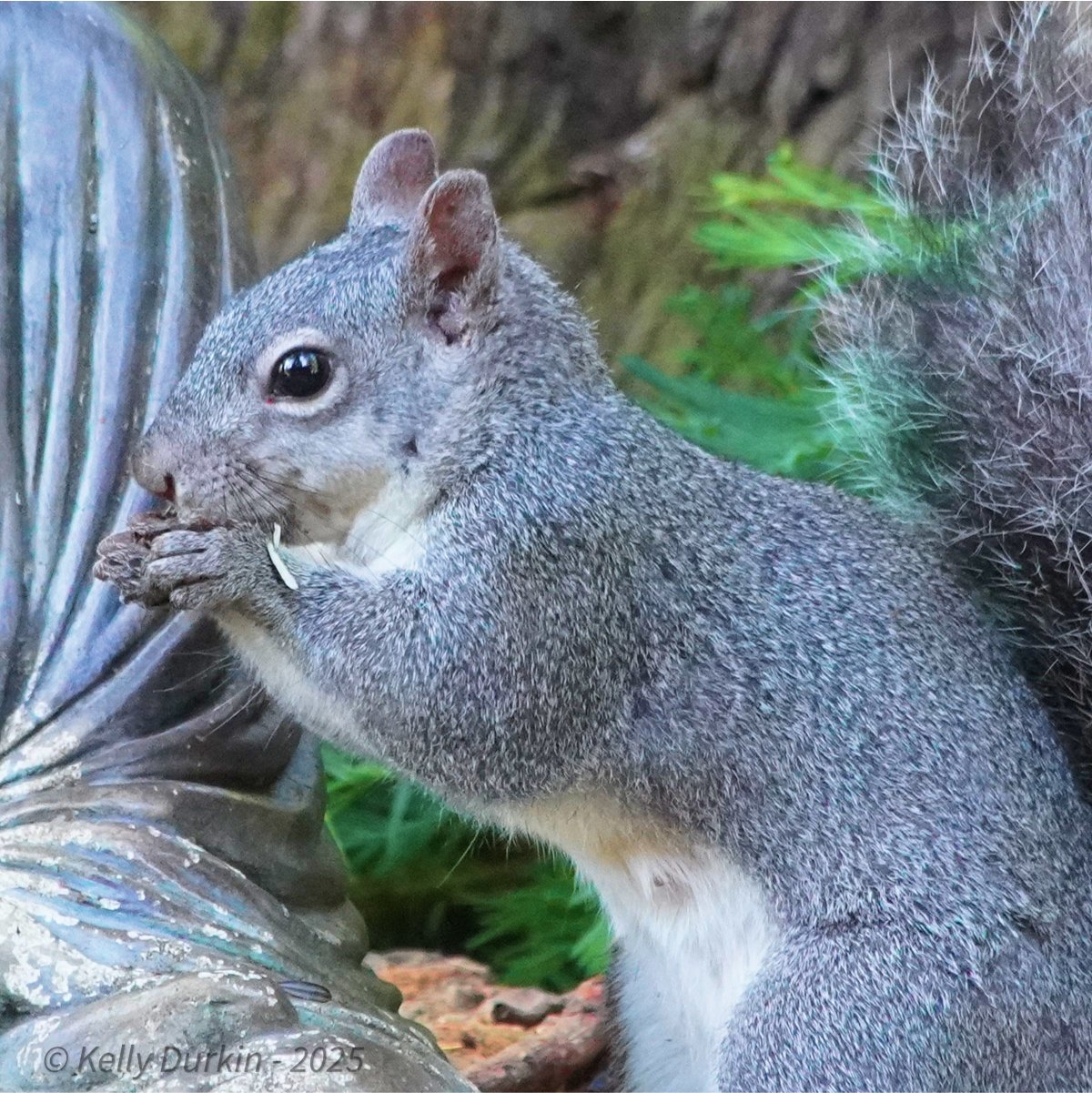
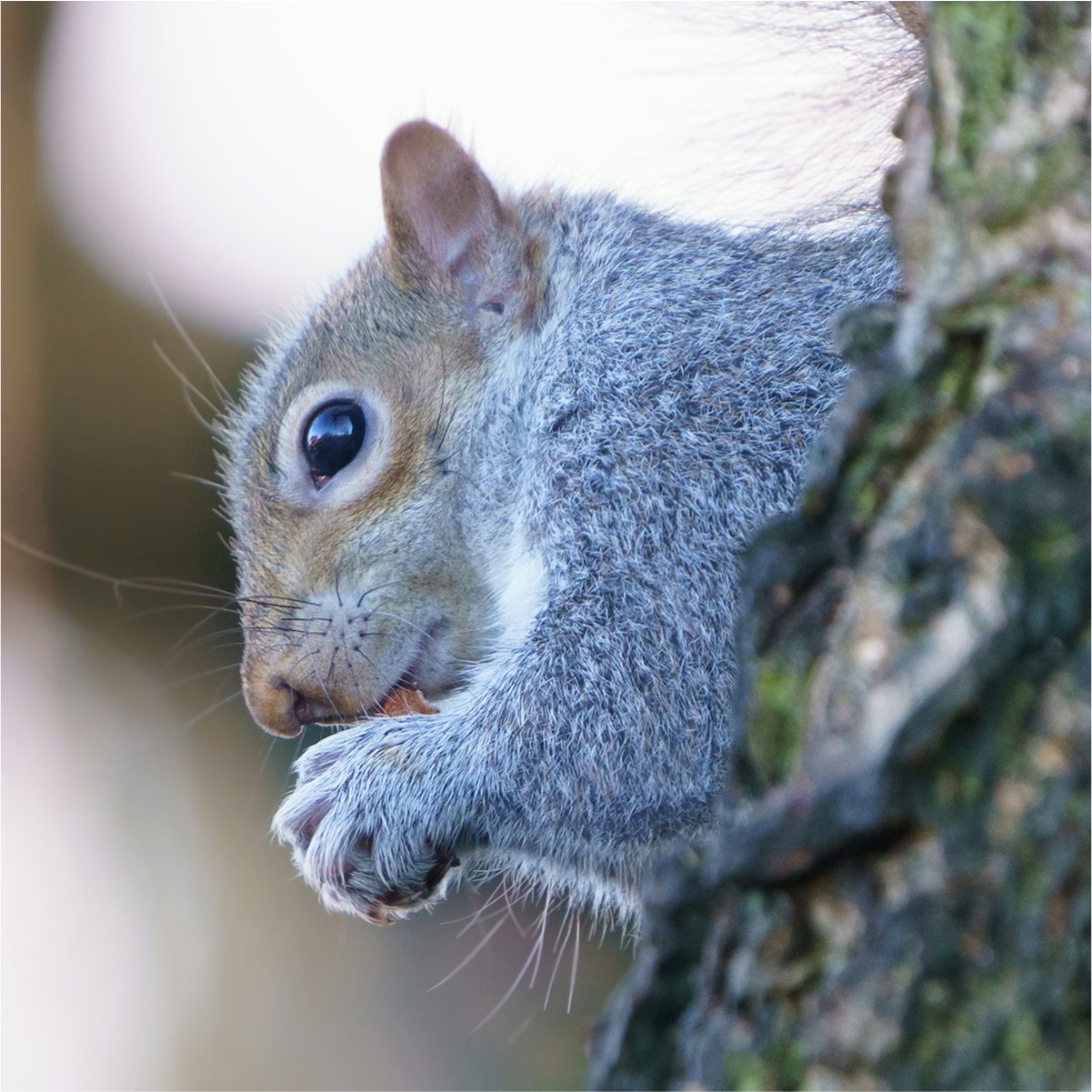
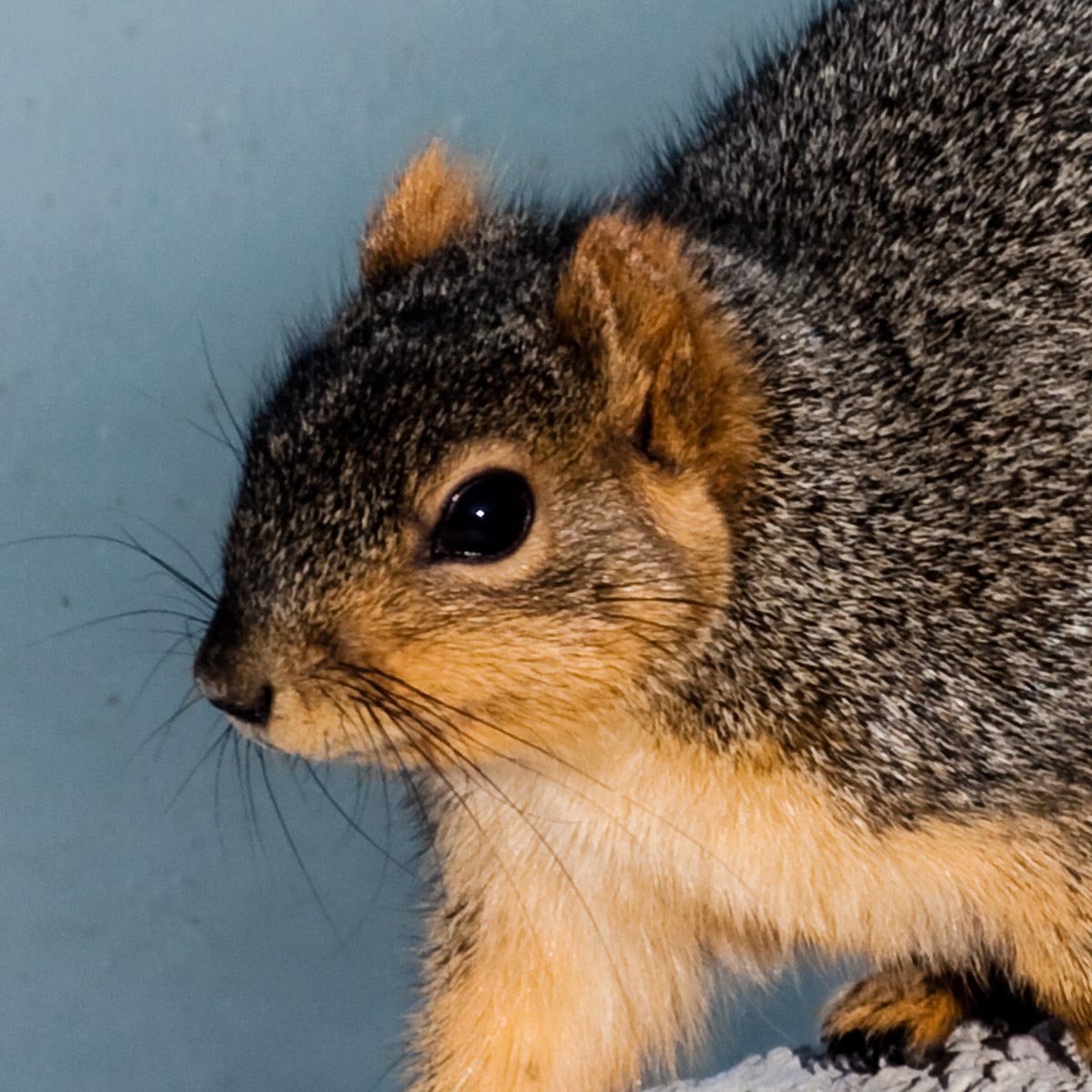
Western Gray, Eastern Gray, and Fox Squirrel
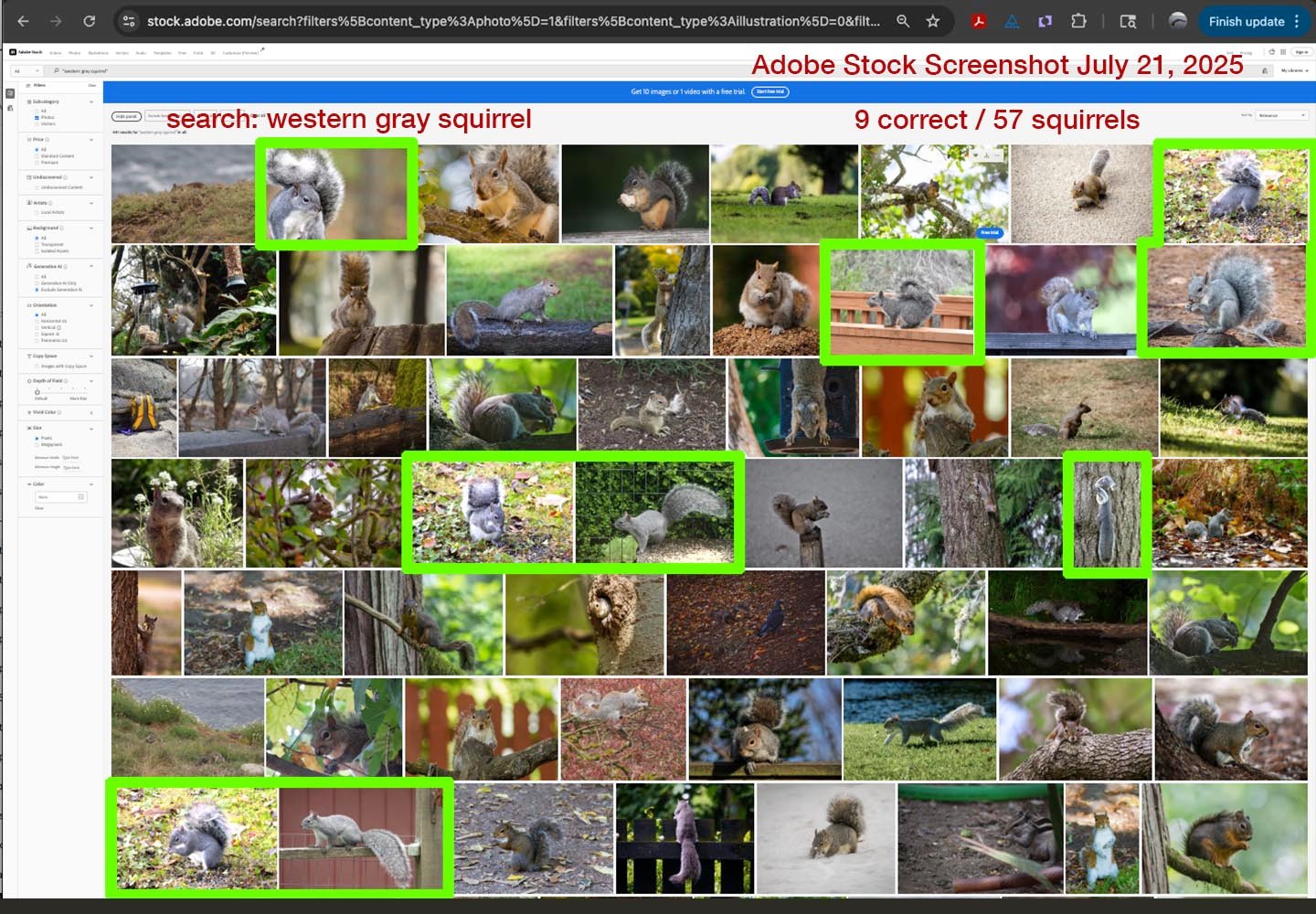
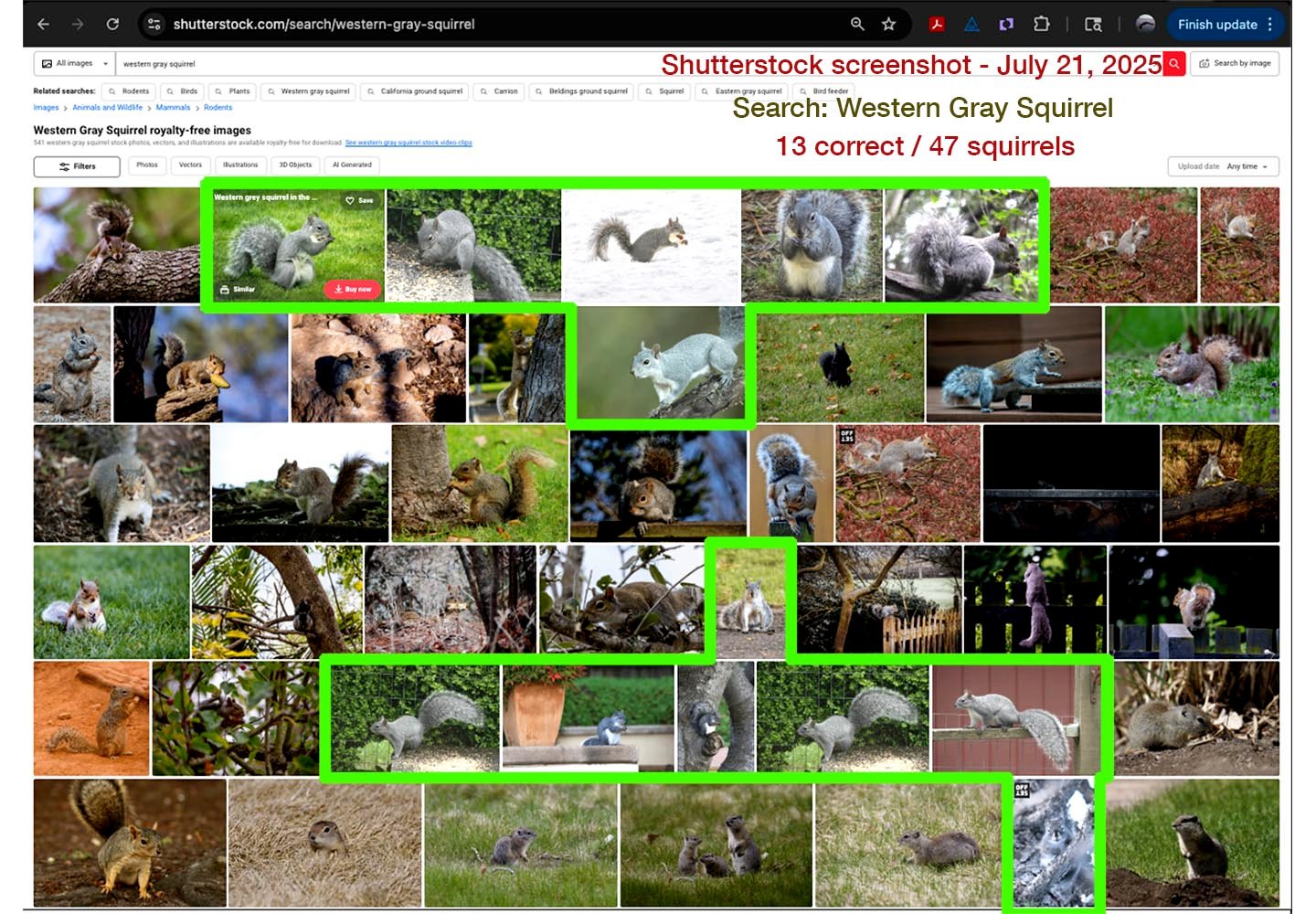
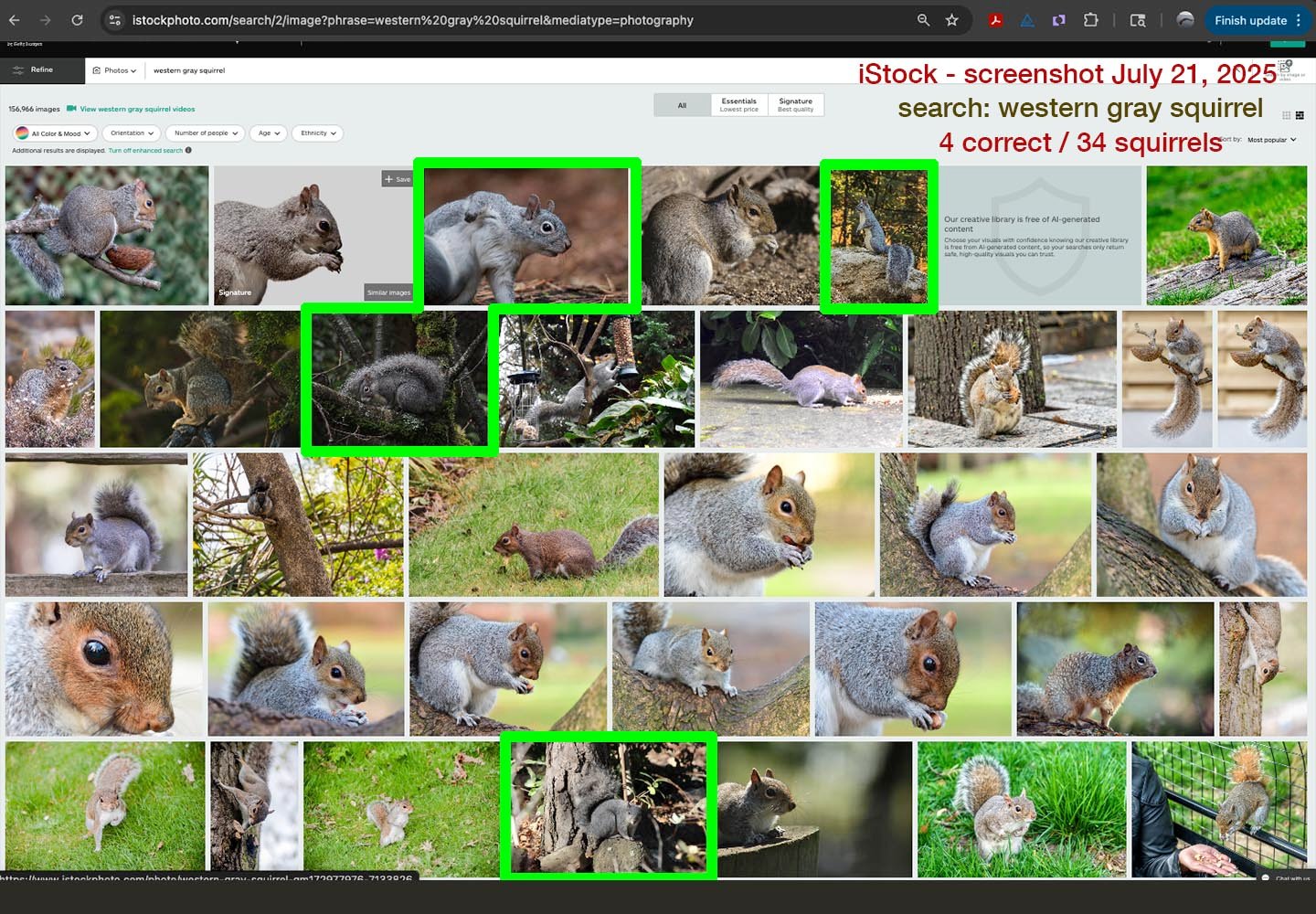
Click Photos to Enlarge

The image shown is a Western Gray (Sciurus griseus), not an Eastern Gray (Sciurus carolinensis). More concerning, the text appears to misread its own source — Etienne Benson’s article in the Journal of American History (Dec. 2013, p. 691) . While Eastern Grays were introduced into several U.S. cities in the 1800s, the species is native to North America.
Eastern Grays were later exported from the U.S. to Europe, where they became invasive. Even if a rare case of re-importation occurred, suggesting they were “imported from Europe” is misleading — the species originated here.
Today, Eastern Grays continue to displace native European Red Squirrels (Sciurus vulgaris) in parts of Italy, the U.K., and Ireland. If any Eastern Grays were brought back from Europe, that would amount to returning a problematic export — not evidence of foreign origin.
For citations and additional reading, see our References & Further Reading below.
If we can’t reliably identify native squirrels — even in published “educational” content — how can we protect them?
Accurate ID isn’t trivia. It’s the foundation for reporting sightings, managing habitat, enforcing protections, and educating the public. If we mistake the invaders for the natives, we risk losing the real Western Gray.